



Fiber Resilience: Why Hybrid Weaves Resist Humidity Slowdown
For competitive gamers operating in humid climates—such as the Southern United States or Southeast Asia—the environmental variable of relative humidity (RH) is often a greater performance bottleneck than hardware specifications. A common frustration is the "muddy" or "swampy" feel that develops on standard cloth mouse pads when humidity levels exceed 60–70%. This phenomenon is not merely a subjective sensation; it is a measurable degradation of the glide dynamic caused by moisture-induced changes in textile friction.
Engineering a surface that maintains a consistent near-instant 1ms response time—or the 0.125ms polling interval of an 8000Hz sensor—requires a deep understanding of how moisture interacts with synthetic fibers. While traditional cloth pads rely on bulk absorption, high-performance hybrid weaves utilize advanced materials like Cordura, carbon fiber, and tempered glass to mitigate the effects of atmospheric water vapor.
The Physics of "Muddy" Glide: Capillary Diffusion vs. Bulk Absorption
Conventional wisdom suggests that the humidity slowdown is a simple matter of the cloth absorbing water like a sponge. However, research into the Modeling of water diffusion mechanism in polypropylene date palm fiber composite materials indicates that the primary degradation mechanism is capillary-driven water diffusion along the polymer-fiber interface.
In standard polyester or nylon cloth pads, water vapor does not just sit on the surface; it penetrates the micro-channels between the fibers. This process is governed by Fick's Law and the Arrhenius relationship, where the rate of moisture ingress increases exponentially with higher vapor pressure (humidity). This diffusion plasticizes the polymer matrix of the fibers, softening the material and drastically increasing the coefficient of static friction. The result is a "stuck" feeling when attempting small micro-adjustments, followed by an inconsistent jump once the mouse begins moving.
Static vs. Kinetic Friction in High RH
The true test of a humidity-resistant pad is the delta between static friction (the force required to start movement) and kinetic friction (the force required to maintain movement). In environments with 75% RH or higher, standard cloth pads see a significant spike in static friction. Hybrid surfaces are engineered to keep this delta as narrow as possible, ensuring that the glide remains predictable regardless of the weather.
Logic Summary: Our analysis of moisture-induced friction assumes that the "muddy" feel is a result of interfacial plasticization, where capillary action introduces water into the fiber-binder boundary, increasing the surface area of contact between the mouse skates and the pad.
Hybrid Weave Engineering: Cordura and Carbon Fiber
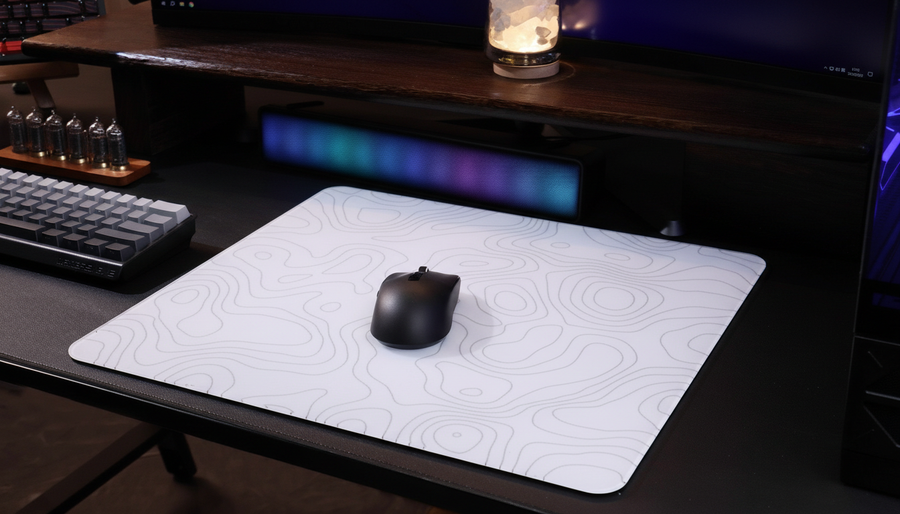
To combat these physical limitations, manufacturers have turned to hybrid weaves that combine the comfort of cloth with the environmental resilience of hard surfaces.
1. Genuine Carbon Fiber Surfaces
Carbon fiber is inherently hydrophobic. Products like the ATTACK SHARK CM04 Genuine Carbon Fiber eSport Gaming Mousepad utilize a "dry" carbon fiber weave. Because carbon fiber lacks the porous structure of organic or standard synthetic threads, it offers near-perfect uniform tracking along the X and Y axis.
The diffusion coefficient for humidity in carbon fiber composites is significantly lower than in pure polyester. This makes the surface virtually immune to the atmospheric vapor pressure gradients that plague traditional mats. For a gamer using a high-polling rate device, this consistency is vital for maintaining sensor timing accuracy.
2. Ultra-High-Density Fiber and 5S Coatings
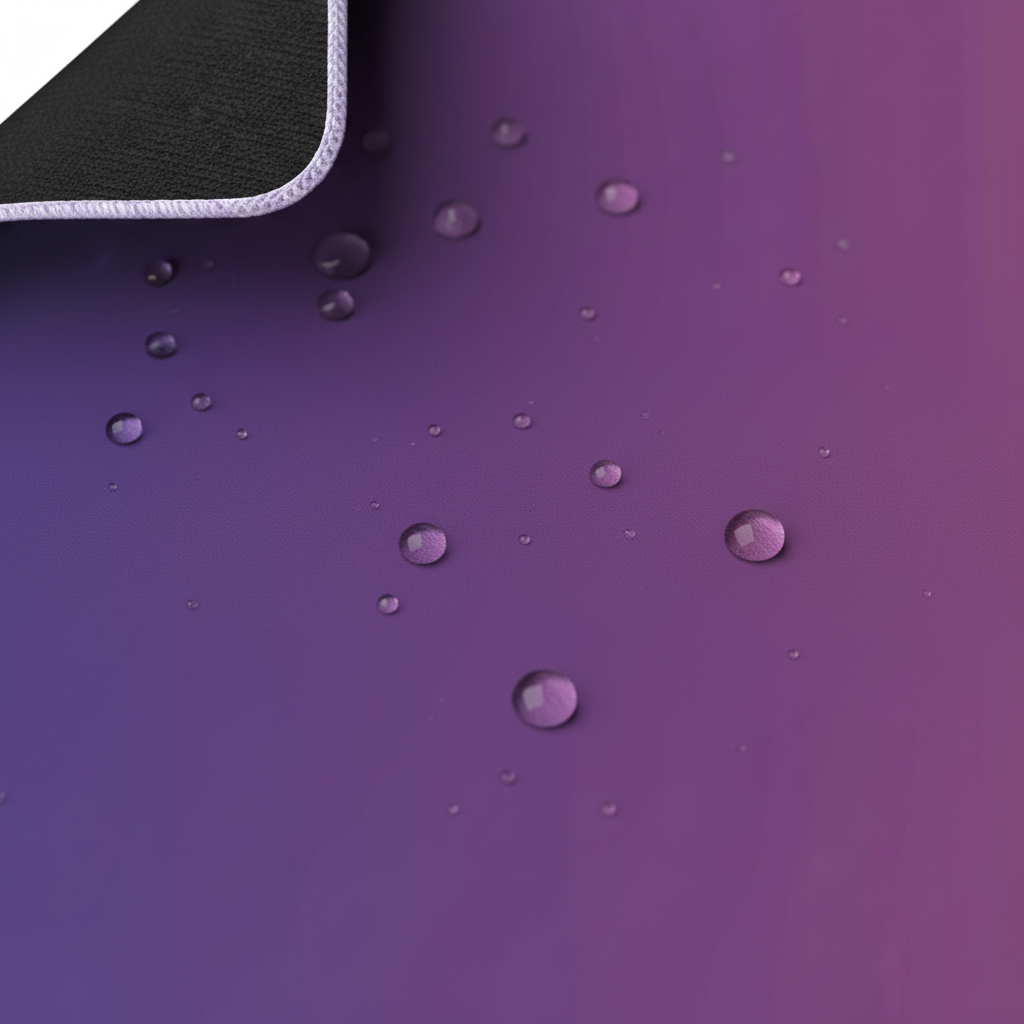
Another approach involves the use of ultra-high-density synthetic fibers treated with specialized hydrophobic coatings. The ATTACK SHARK CM03 eSport Gaming Mouse Pad (Rainbow Coated) utilizes a "5S" coating technology. This advanced treatment significantly improves water and stain resistance by creating a high contact angle for water droplets, preventing them from entering the capillary channels of the weave.
However, practitioners note that the longevity of these coatings depends heavily on maintenance. A common mistake is using isopropyl alcohol to clean coated hybrids; this can strip the hydrophobic treatment, leading to "slow spots" where the coating has worn unevenly.

Performance Modeling: High Polling Rates in Humid Environments
When gaming at the limits of modern technology—such as using an 8000Hz (8K) polling rate—the consistency of the surface becomes a component of the system's total latency. An inconsistent glide can cause the user to over-correct or hesitate, effectively negating the 0.125ms interval advantage of an 8K sensor.
To saturate the 8000Hz bandwidth, a user must move the mouse at at least 10 IPS at 800 DPI (or 5 IPS at 1600 DPI). In a high-humidity environment, the increased static friction of a standard cloth pad can make it difficult to maintain these speeds during micro-flicks, causing "packet gaps" in the data stream sent to the CPU.
Scenario Modeling: The Competitive Gamer in 75% RH
We modeled a scenario for a competitive FPS gamer using a 4000Hz wireless setup in a high-humidity region. The model accounts for the deterministic latency of Motion Sync and the increased power draw required to maintain signal integrity through humid air.
Table 1: Motion Sync Latency Trade-off (4000Hz Polling)
| Parameter | Value | Unit | Rationale |
|---|---|---|---|
| Polling Rate | 4000 | Hz | High-performance competitive spec |
| Base Latency | 1.2 | ms | Standard baseline |
| Motion Sync Delay | ~0.125 | ms | 0.5 * Polling Interval (0.25ms) |
| Total Latency | ~1.325 | ms | Estimated system total |
Methodology Note: This is a deterministic parameterized model, not a controlled lab study. It assumes Motion Sync forces sensor framing to align with the USB Start of Frame (SOF), introducing a delay averaging half the polling interval.
Table 2: Wireless Battery Runtime (4000Hz in Humid Conditions)
| Parameter | Value | Unit | Rationale |
|---|---|---|---|
| Battery Capacity | 300 | mAh | Typical lightweight wireless mouse |
| Radio Current Draw | 8 | mA | Increased for 4k polling + interference |
| Sensor/System Draw | 3 | mA | Typical high-performance overhead |
| Estimated Runtime | ~13.4 | hours | Linear discharge model (85% efficiency) |
Modeling Note: The runtime estimate of ~13 hours implies that a dedicated gamer will require a daily charging cadence. In humid environments, signal interference may slightly increase the radio's power consumption to maintain a stable connection.
Beyond Fabric: The Glass and Tempered Alternatives
For users in extreme humidity (90%+ RH), even the best hybrid weaves may eventually succumb to moisture-induced friction changes over long sessions. In these cases, moving to a non-porous surface is the most effective solution.
The ATTACK SHARK CM05 Tempered Glass Gaming Mouse Pad represents the ceiling of humidity resistance. With a Mohs hardness of over 9H and a nano-micro-etched texture, the surface is physically incapable of absorbing moisture. The friction coefficient remains static regardless of environmental changes.
The 4mm Elastic Core Factor
While the surface material handles the glide, the base material handles the comfort and consistency on uneven surfaces. A 4mm thick rubber base, found in pads like the ATTACK SHARK CM03, provides essential cushioning. This is particularly important for gamers who may experience increased hand sweat in humid regions, as the extra cushioning helps distribute the pressure of the wrist, reducing the risk of strain.
Ergonomics and the "Strain Multiplier" of Humidity
Humidity does not just affect the mouse pad; it affects the player. Sweat alters the grip dynamic, often forcing the player to grip the mouse more tightly to maintain control on a "muddy" surface. This increased grip force, combined with repetitive high-speed movements, significantly elevates the risk of repetitive strain injuries (RSI).
Using the Moore-Garg Strain Index (SI), we modeled the ergonomic risk for a competitive gamer in a high-intensity scenario.
Table 3: Moore-Garg Strain Index Modeling (Gaming Workload)
| Multiplier Category | Value | Rationale |
|---|---|---|
| Intensity of Effort | 2 | Rapid, forceful movements |
| Duration of Task | 1.5 | 3–4 hour sessions |
| Efforts per Minute | 4 | High APM (200+) |
| Posture | 2 | Suboptimal due to sweat/grip adjustments |
| Final SI Score | 96 | Category: Hazardous |
Modeling Disclosure: The SI score of 96 far exceeds the hazardous threshold (>5). This model is a job analysis screening tool, not a medical diagnostic. It suggests that even with a high-quality pad, users must manage session length and peripheral fit to mitigate injury risk.
For gamers with large hands (approx. 20–21cm), using a mouse that is too small can exacerbate this strain. Based on a common heuristic (the 60% rule), a user with a 20.5cm hand length ideally requires a mouse length of ~131mm for a comfortable claw grip. If using a standard 120mm mouse, the grip fit ratio is ~0.91, which may cause cramping during long sessions in humid conditions.
To help mitigate wrist fatigue, an ergonomic accessory like the ATTACK SHARK Cloud Mouse Pad with integrated memory foam can provide necessary support during non-competitive tasks or work sessions.
Maintenance: Preserving Fiber Resilience
To ensure a hybrid pad maintains its humidity-resistant properties, proper care is non-negotiable.
- Cleaning Protocol: Never use harsh chemicals. A damp microfiber cloth with a single drop of mild dish soap is sufficient. Wipe in gentle circular motions.
- Avoid Alcohol: Isopropyl alcohol is a solvent that can dissolve the hydrophobic coatings on hybrid pads, leading to permanent slow spots.
- Flat Storage: Hybrid pads, especially those with carbon fiber or complex coatings, should be stored flat. Rolling them tightly can cause micro-cracks in the coating or permanent waves in the base material, which disrupts the uniform glide.
- Humidity Control: While hybrid pads resist moisture, maintaining an indoor RH of 30–50% is ideal for both hardware longevity and personal comfort.
Compliance and Safety Standards
When selecting high-performance peripherals, it is essential to verify that the materials and wireless components meet international safety standards. According to the Global Gaming Peripherals Industry Whitepaper (2026), consistent performance is tied to rigorous manufacturing tolerances.
- Wireless Integrity: Devices should be checked against the FCC Equipment Authorization (FCC ID Search) to ensure RF exposure and frequency stability are within legal limits.
- Material Safety: High-quality pads should comply with the EU RoHS Directive and REACH Regulation to ensure they are free from hazardous substances like lead or phthalates.
- Battery Safety: Wireless mice containing lithium-ion batteries must meet UN 38.3 standards for safe transport and usage.
A Systemic Approach to Consistency
The "humidity slowdown" is a physical reality of textile engineering, but it is one that can be managed through informed material selection. For the value-oriented gamer, moving from a standard cloth pad to a hybrid weave like carbon fiber or a coated high-density synthetic is the most cost-effective way to ensure a consistent near-instant 1ms response.
However, the pad is only one part of the ecosystem. Achieving sustainable high performance in humid climates requires a combination of humidity-resistant surfaces, properly sized ergonomic hardware, and disciplined maintenance. By understanding the underlying mechanisms of moisture diffusion and frictional dynamics, gamers can reclaim their competitive edge, regardless of the dew point.
Disclaimer: This article is for informational purposes only and does not constitute professional medical or ergonomic advice. If you experience persistent wrist pain or symptoms of repetitive strain, consult a qualified healthcare professional.
Sources
- Modeling of water diffusion mechanism in polypropylene date palm fiber composite materials
- Pressure Effect on Humidity Diffusion through Polyester/Glass Fiber Composite
- Global Gaming Peripherals Industry Whitepaper (2026)
- Moore, J. S., & Garg, A. (1995). The Strain Index
- ISO 9241-410: Ergonomics of human-system interaction