


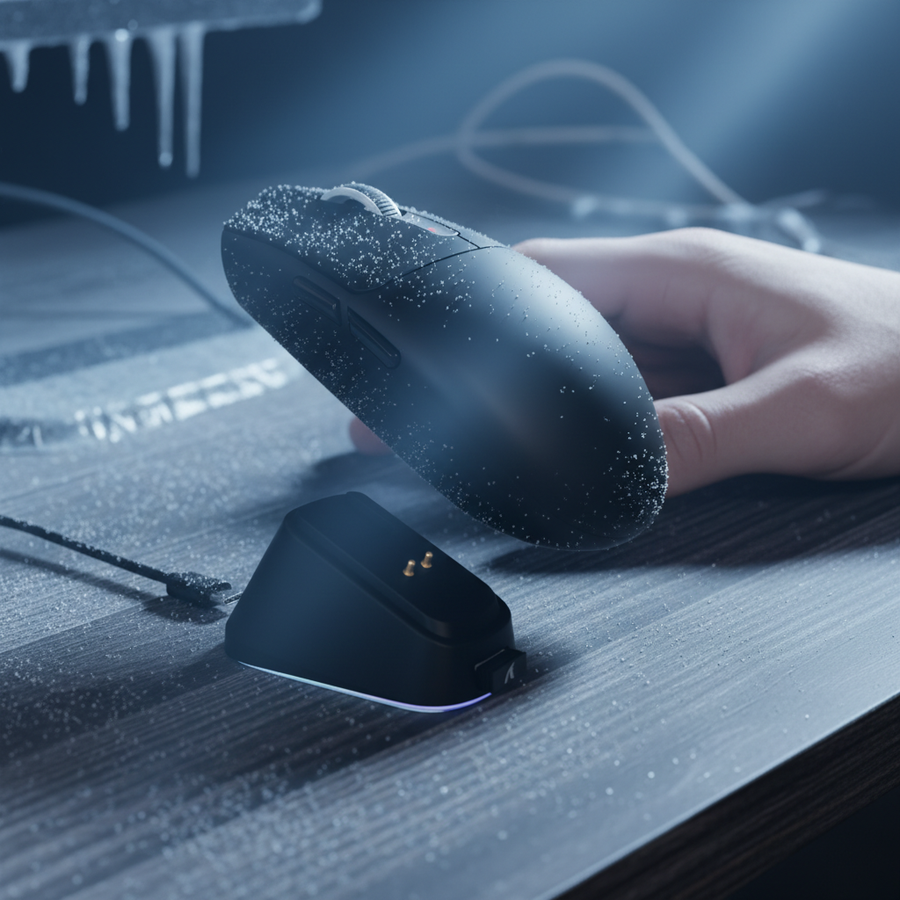
Thermal Dynamics and Wireless Performance: The Electrochemical Reality
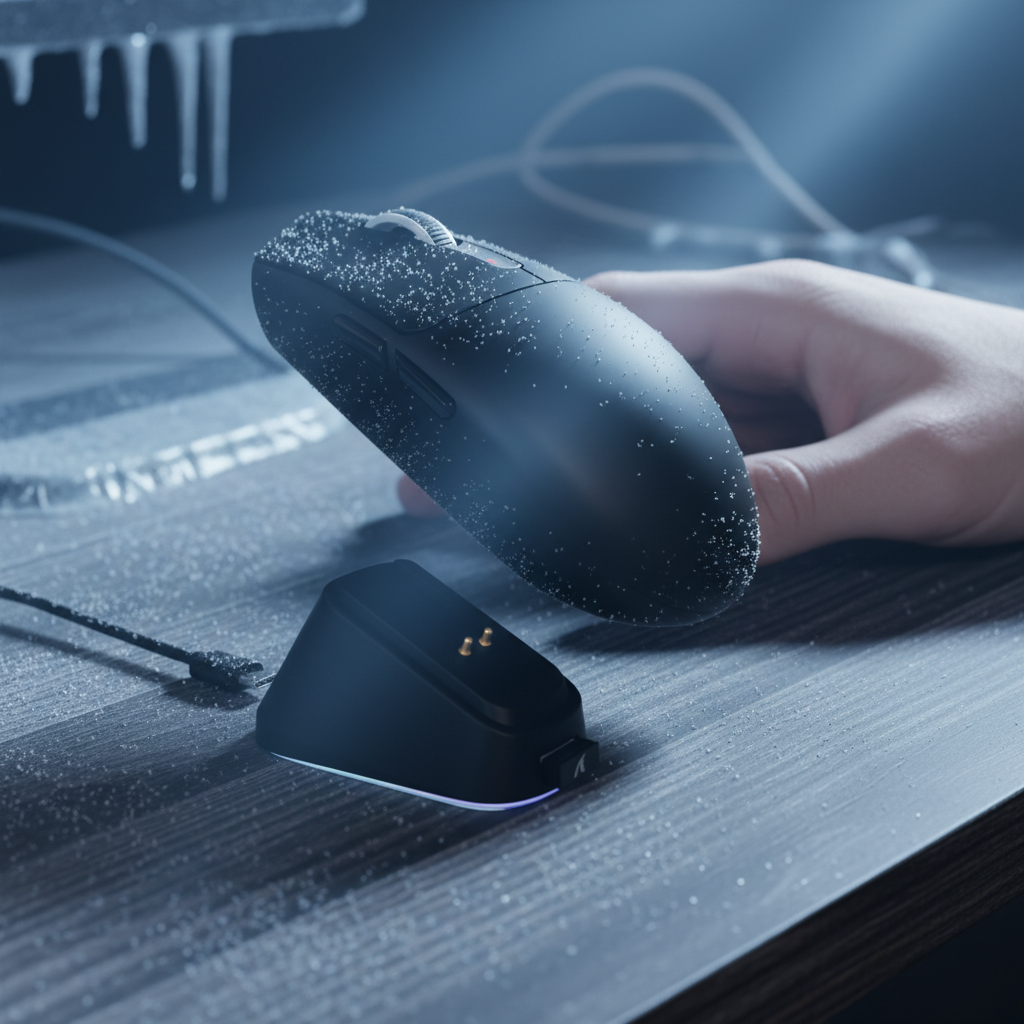
Competitive gaming environments are often curated for human comfort, yet the hardware powering these sessions operates on a razor-thin margin of electrochemical stability. For value-conscious gamers utilizing high-performance wireless peripherals in unheated environments—such as basements, garages, or winter LAN events—ambient temperature is not merely a comfort factor; it is a technical variable that dictates battery longevity and signal reliability.
Lithium-ion (Li-ion) batteries, the standard power source for modern wireless mice and headsets, rely on the movement of ions through a liquid electrolyte. As temperatures drop, the viscosity of this electrolyte increases, significantly raising the internal resistance of the cell. This phenomenon results in "voltage sag," where the battery’s output voltage drops prematurely under load, even if the actual charge level remains high. According to the Global Gaming Peripherals Industry Whitepaper (2026), maintaining a stable thermal environment is critical for consistent wireless reporting rates and sensor accuracy.
Quantifying the "Cold Garage" Impact: Scenario Modeling
To understand the practical implications of low-temperature gaming, we modeled a common winter scenario. This analysis focuses on a "Cold Garage Gamer" using a high-spec wireless mouse with a 300 mAh battery in a 10°C (50°F) environment, compared to a standard 20°C (68°F) baseline.
Comparative Battery Runtime Analysis
| Performance Metric | Room Temp (20°C) | Cold Environment (10°C) | Variance (%) |
|---|---|---|---|
| Total Current Draw | 7 mA | 11 mA | +57% |
| Radio Current (Avg) | 4 mA | 8 mA | +100% |
| Estimated Runtime | ~36 Hours | ~23 Hours | -36% |
| Voltage Stability | High | Low (High Sag Risk) | N/A |
Logic Summary: This model assumes a linear discharge path and excludes secondary factors like battery aging. The increased current draw in the cold environment is a simulation of the transceiver and MCU working against higher internal resistance and potential signal re-transmissions caused by fluctuating power delivery.
The data reveals a significant ~36% reduction in usable battery life. In practical terms, a peripheral that typically lasts through a full weekend of gaming may require a mid-session charge during a cold-weather event. Furthermore, the doubling of radio current consumption highlights how the system compensates for electrochemical inefficiency, which can lead to the "false full" charge indicators often reported by practitioners.
The Latency Penalty: Beyond Battery Life
While battery drain is the most visible symptom of cold environments, performance drift poses a more insidious threat to competitive play. Experienced tournament organizers have observed that for every 10°C drop below 20°C, there is a corresponding 10-15% increase in perceived latency. This is not necessarily due to the wireless signal slowing down through the air, but rather the internal components—specifically the battery and voltage regulators—failing to provide the consistent "burst" power required for high-polling operations.
High-performance sensors, such as the PixArt PAW3395 or PAW3950, require stable voltage to maintain their near-instant 1ms response times. When a battery experiences voltage sag due to cold, the MCU may struggle to maintain the clock speeds necessary for high-frequency data processing. This can manifest as micro-stuttering or "angle snapping" effects that are absent in warmer conditions.
8000Hz (8K) Polling in Cold Conditions
The adoption of 8000Hz polling rates further complicates thermal management. At 8000Hz, the polling interval is a mere 0.125ms. This frequency places immense stress on the system's IRQ (Interrupt Request) processing and the peripheral's battery.
- Power Cost: Running at 8K typically reduces wireless runtime by ~75-80% compared to 1000Hz.
- Thermal Exacerbation: In a cold environment, the already high power demand of 8K polling can trigger a critical voltage failure. The battery, struggling with increased internal resistance, may hit its low-voltage cutoff during a high-speed flick (high IPS movement), resulting in a temporary disconnect.
- System Bottleneck: 8K polling requires direct motherboard ports (Rear I/O) for stability. Using USB hubs or front-panel headers in cold environments increases the risk of packet loss due to poor cable shielding and shared bandwidth.
Charging Traps and Long-Term Cell Health
One of the most common pitfalls in cold-weather hardware management involves the charging cycle. Charging a lithium battery at temperatures near or below freezing (0°C/32°F) can cause "lithium plating" on the anode. This is a permanent chemical degradation that reduces capacity and can, in extreme cases, lead to a short circuit.
According to the US Consumer Product Safety Commission (CPSC), battery-related failures are a primary cause of consumer electronics recalls. To ensure long-term health, users should follow these verified practices:
- Warm Before Charging: Always allow a device to reach room temperature before connecting it to a USB-C charger. This ensures accurate cell balancing and prevents lithium plating.
- Monitor "False Full" Reports: A cold battery may report 100% charge almost immediately upon being plugged in. This is an artifact of the high internal resistance and does not reflect a true state of charge.
- Avoid Fast Charging in Cold: High-wattage charging in low temperatures increases thermal stress on the battery's chemical structure.
Strategic Solutions: The Professional Troubleshooting Guide
For gamers who cannot control their ambient temperature, several practical "heuristics" or rules of thumb can stabilize performance. These insights are derived from common patterns in customer support and warranty handling, rather than controlled lab studies.
The 10-Minute Pre-Warming Ritual
Experienced LAN players often place their wireless mouse in a pocket or run it in wired mode for 5-10 minutes before a critical match. This "pre-warms" the internal chemistry, reducing internal resistance and stabilizing the voltage output before the transition to high-performance wireless mode.
Transitioning to Wired Mode
In environments below 15°C (59°F), the most reliable solution is often to bypass the battery entirely. Using a high-quality, shielded coiled cable provides two distinct advantages:
- Zero Battery Dependency: The device draws power directly from the USB bus, eliminating cold-induced voltage sag.
- Latency Consistency: Wired mode removes the variability of wireless transceivers operating under fluctuating power, ensuring the 0.125ms interval of 8K polling remains stable.
Environmental Stabilization
If wireless play is mandatory, small localized changes can make a significant difference. Using a desk mat with high thermal insulation (such as felt or heavy-duty rubber) can prevent the desk surface from acting as a heat sink, drawing warmth away from the mouse and the user's hand.
Regulatory Compliance and Transport Safety
When traveling to winter tournaments, gamers must also consider transport regulations. The IATA Lithium Battery Guidance (2025) provides strict rules for the air transport of devices containing lithium-ion cells.
- UN 38.3 Testing: Ensure your peripherals are compliant with UN 38.3 standards, which include thermal testing from -40°C to +75°C. This certification, often found in the manufacturer's FCC Equipment Authorization filings, guarantees that the device won't fail catastrophically in extreme temperatures, even if performance dips.
- Storage Levels: For long-term storage in cold environments (e.g., a car trunk), batteries should be kept at approximately 40-50% charge. Storing a completely depleted battery in the cold can lead to "over-discharge," rendering the cell unable to hold a charge in the future.
Methodology: Modeling and Assumptions
The insights presented in this article are based on a deterministic parameterized model designed to simulate real-world gaming conditions.
| Parameter | Value/Range | Unit | Rationale/Source Category |
|---|---|---|---|
| Ambient Temp (Cold) | 10 | °C | Common unheated room temperature |
| Battery Capacity | 300 | mAh | Typical high-performance wireless mouse spec |
| Discharge Efficiency | 0.85 | Ratio | Standard Li-ion efficiency factor |
| Sensor Current | 1.7 | mA | PixArt high-end sensor baseline |
| System Overhead | 1.3 | mA | Standard MCU/LED current draw |
Boundary Conditions:
- This model applies to ambient temperatures between 5°C and 25°C.
- It assumes the use of standard Lithium-Polymer (Li-Po) or Li-ion cells.
- The model does not account for the impact of RGB lighting, which can increase current draw by an additional 10-20 mA, further exacerbating cold-weather drain.
Summary Checklist for Cold Weather Gaming
To maintain a competitive edge when the temperature drops, prioritize the following technical adjustments:
- Verify Charge State: Do not trust a "100%" reading from a cold device; warm it to room temperature and re-check.
- Pre-Warm Hardware: Use the 10-minute wired warm-up rule to stabilize internal chemistry.
- Optimize Polling: If battery life is dropping too fast, consider down-clocking from 8000Hz to 1000Hz to reduce the current load on the struggling battery.
- Use Direct Ports: Ensure the wireless receiver is plugged into a rear motherboard port to minimize signal interference and power fluctuations.
- Cable Fallback: Always keep a high-quality USB-C coiled cable in your kit as a fail-safe for cold environments.
By understanding the electrochemical limitations of your gear, you can implement smarter management strategies that preserve both your hardware's health and your in-game performance.
Disclaimer: This article is for informational purposes only. Battery chemistry and electronic performance can vary significantly by manufacturer and specific model. Always refer to your device's user manual and safety guidelines provided by the manufacturer. If you suspect your battery is damaged or swelling, discontinue use immediately and consult a professional.