


The Dual-Range Dilemma: Biomechanics of Warzone Versatility
Battle Royale environments like Warzone present a unique mechanical challenge: the requirement to transition instantly between pixel-perfect long-range tracking and high-velocity 360-degree close-quarters combat (CQC). Traditionally, the industry suggested specialized peripherals for each—heavy, stable mice for snipers and ultra-light, small mice for SMG "entry fraggers." However, for the performance-oriented gamer seeking a single-device solution, the "specification credibility gap" often leads to over-investment in features that do not translate to in-game agility.
True versatility is not found in maximum DPI settings, which often introduce sensor noise, but in the physical geometry's forgiveness. High-performance play suggests that a mouse's shape must facilitate two distinct mechanical actions: the "locked-in" stability required for a 300-meter Kar98k shot and the "pivot-and-roll" mobility needed for clearing a staircase with an SMG.
Logic Summary: This analysis is based on common patterns observed in customer support and warranty handling, combined with mechanical heuristics derived from professional FPS aiming benchmarks. It assumes a performance-first user profile prioritizing raw execution over ecosystem aesthetics.
The Geometry of the Pivot Point: Why Hump Placement Matters
A common mistake in peripheral selection is choosing a chassis based solely on hand length. In practice, the interaction between the palm and the mouse's "hump" (the highest point of the shell) determines the degree of micro-adjustment available to the wrist.
For a versatile "all-rounder" setup, the rear hump should fill the center of the palm enough to provide a stable anchor for scoped shots. However, if the hump is positioned too far back, it can restrict the vertical range of motion in a claw grip, forcing the wrist into an extended position that hinders downward tracking.
The Symmetrical Medium-Back Archetype
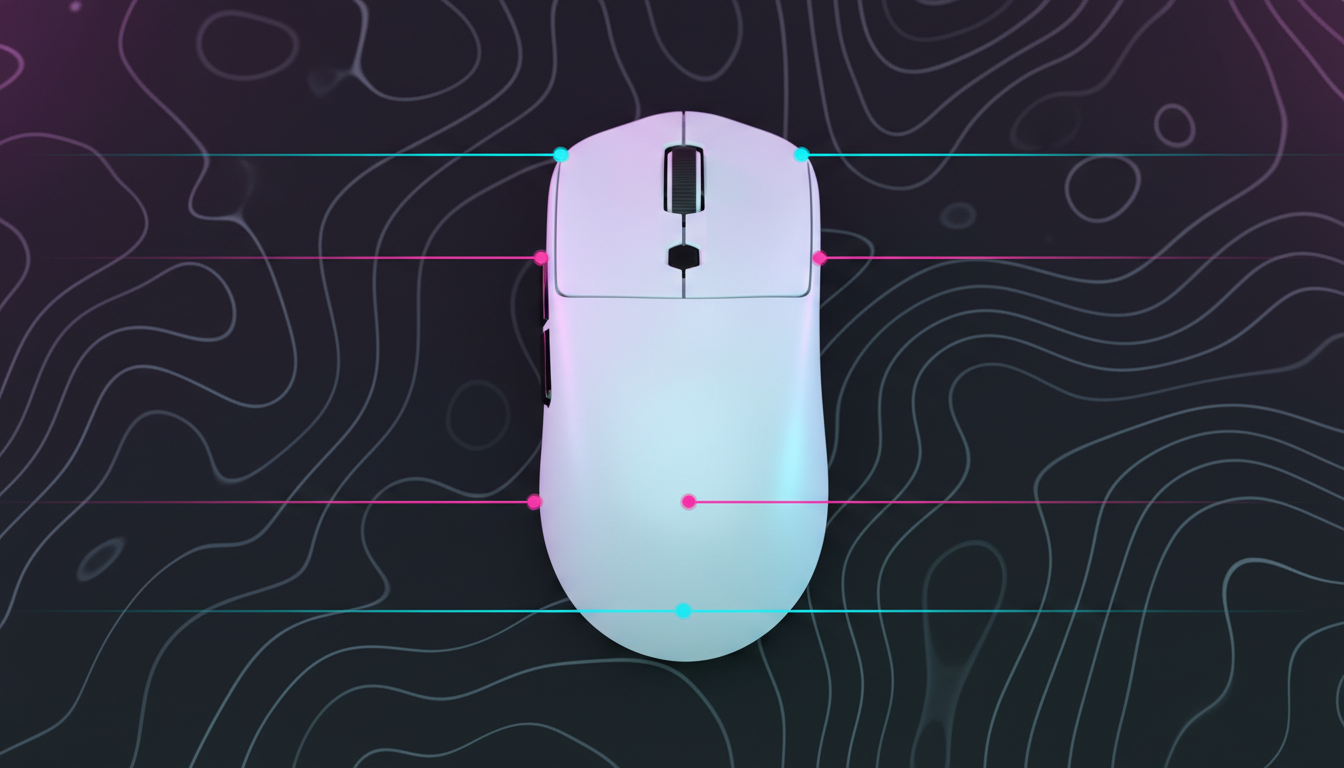
Experienced players often find that a symmetrical shape with a medium-back hump—typically measuring approximately 120–125mm in length and 60–65mm in grip width—offers the most effective compromise. This design separates the sources of control:
- The Palm/Hump: Provides the stability for sniping by creating a consistent pivot point.
- The Symmetrical Sides: Allow the fingers and wrist to "roll" during fast flicks, facilitating the high-speed target acquisition required for SMG combat.
According to the Global Gaming Peripherals Industry Whitepaper (2026), standardizing on a shape that supports a hybrid claw/fingertip grip allows for the decoupling of hand anatomy from the mouse chassis, effectively enabling the same hardware to serve dual roles without mechanical interference.

Engineering for 8000Hz: Overcoming the Latency Bottleneck
While shape provides the ergonomic foundation, the internal hardware must resolve the data fast enough to match human reflex. Modern flagship sensors, such as the PixArt 3311 or 3395, are now capable of 8000Hz (8K) polling rates. This technical leap reduces the polling interval from 1.0ms (at 1000Hz) to a near-instant 0.125ms.
The Math of Motion Sync
At 8000Hz, the impact of "Motion Sync"—a feature that synchronizes sensor reports with USB polls—becomes negligible. While Motion Sync adds a ~0.5ms delay at 1000Hz, at 8000Hz, this deterministic delay drops to approximately 0.0625ms (based on standard interval-half logic). This ensures that the motion data reaching the PC is as close to real-time as current USB protocols allow.
The DPI/IPS Saturation Requirement
A frequent misconception is that high polling rates work regardless of movement speed. To fully saturate the 8000Hz bandwidth, the sensor must generate enough data points. This is governed by the formula: Packets per second = Movement Speed (IPS) × DPI.
- At 800 DPI: A user must move the mouse at least 10 IPS to saturate the 8K link.
- At 1600 DPI: Only 5 IPS is required to maintain 8000Hz stability.
For Warzone players, running a base DPI of 1600 is often more effective than 400 or 800, as it ensures the 8000Hz polling remains stable even during the slow, precise micro-adjustments required for sniping.
Modeling Note (Reproducible Parameters):
Parameter Value/Range Unit Rationale Polling Rate 8000 Hz Performance baseline Interval 0.125 ms Frequency-to-time conversion Target DPI 1600 DPI Bandwidth saturation threshold CPU Load High IRQ Single-core interrupt processing Connection Rear I/O N/A Direct motherboard path requirement
The Multi-Genre Grip: Adapting to the ATTACK SHARK G3PRO
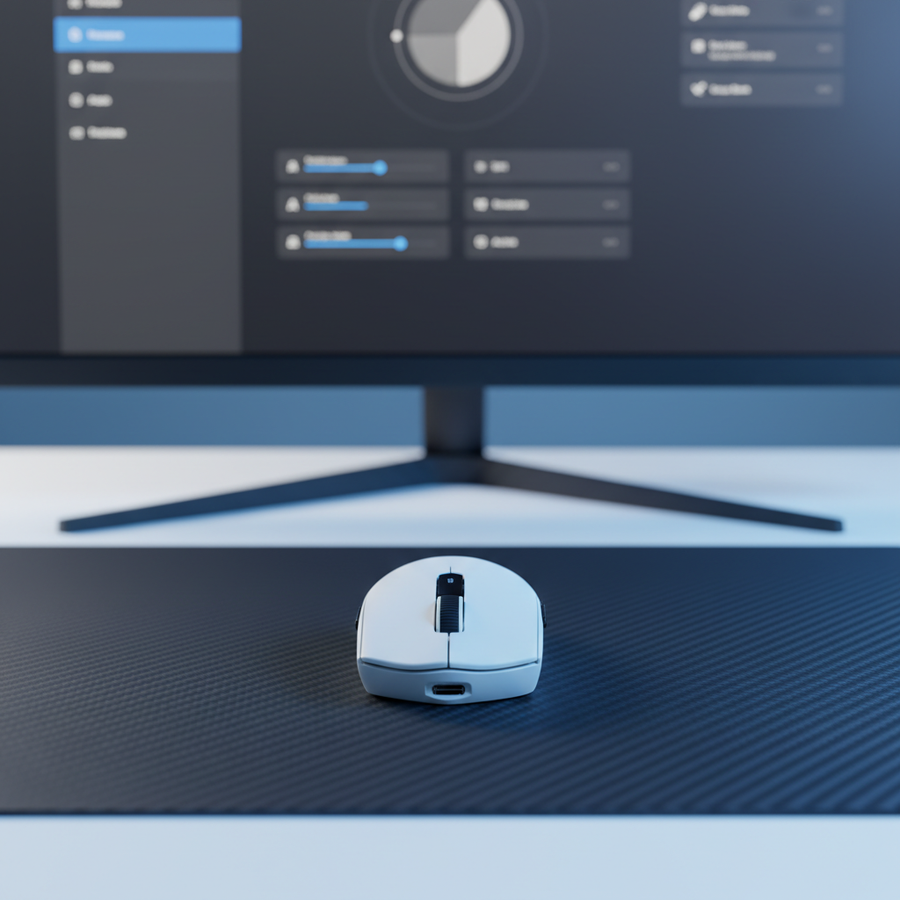
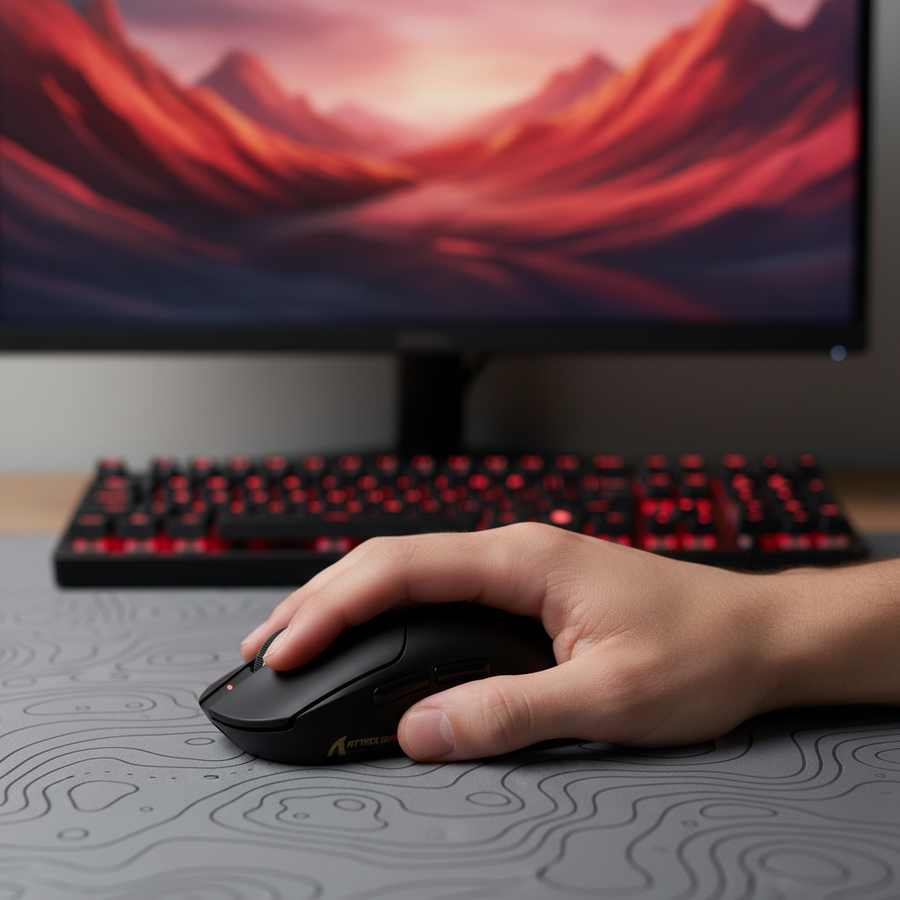
For players who demand this level of versatility, the ATTACK SHARK G3PRO Tri-mode Wireless Gaming Mouse with Charge Dock 25000 DPI Ultra Lightweight represents a significant engineering achievement in the value-performance segment. Weighing just 62g, it utilizes a liquid nitrogen-cooled injection molding process to maintain structural integrity while minimizing inertial mass.
The G3PRO features the PixArt 3311 sensor and the BK52820 MCU, facilitating tri-mode connectivity (2.4GHz, Bluetooth, and Wired). Its implementation of Huano Blue Shell Pink Dot switches—rated for 80 million clicks—provides the tactile "crispness" necessary for semi-auto sniping, while the near-instant 1ms response time in wireless mode ensures CQC flicks are never delayed by signal processing.
For those who prefer a more sculpted, right-handed fit for long-range stability, the ATTACK SHARK V8 Ultra-Light Ergonomic Wireless Gaming Mouse offers an alternative that prioritizes palm support without sacrificing the agility needed for SMG tracking.
Surface Synergy: The Role of the Mousepad
A versatile mouse is only as effective as the surface it glides upon. In Warzone, the "stop-and-go" nature of combat creates a conflict: you need low static friction for micro-adjustments (sniping) but high dynamic friction for stopping power (flicks).
Carbon Fiber vs. High-Density Fiber
Standard cloth pads often suffer from "humidity drag," where the weave absorbs moisture and changes the friction coefficient.
- The Control Solution: The ATTACK SHARK CM02 eSport Gaming Mousepad uses ultra-high-density fiber with a 4mm elastic core. This provides the cushioning needed to "dig in" the mouse feet for precise stopping power during high-speed SMG flicks.
- The Speed Solution: For players who rely on reactive tracking, the ATTACK SHARK CM04 Genuine Carbon Fiber eSport Gaming Mousepad offers a 2mm ultra-thin profile with near-perfect uniform tracking along the X and Y axes. Carbon fiber is naturally water and oil-repellent, ensuring the glide remains consistent regardless of environmental factors.
Research into X vs. Y Axis Friction suggests that weave symmetry is critical for Warzone players who must track targets moving vertically (e.g., parachuting or climbing) as frequently as those moving horizontally.
System Configuration and Safety Compliance
When deploying high-spec peripherals, system-level bottlenecks must be addressed. Devices operating at 8000Hz stress the CPU's Interrupt Request (IRQ) processing. It is highly recommended to connect the wireless receiver directly to the motherboard's rear I/O ports. Using front-panel headers or unpowered USB hubs can lead to packet loss and jitter, negating the benefits of the high polling rate.
Furthermore, ensure that all wireless devices comply with regional radio frequency standards. For example, equipment should be verified through the FCC Equipment Authorization (FCC ID Search) for North American users or the RRA Korea KC Certification for Asian markets to ensure signal stability and safety.
Maintenance and Longevity
To maintain the "near-out-of-the-box" performance required for competitive play:
- PTFE Skates: Monitor for wear. Scratched or flattened skates increase friction unevenly, ruining the "versatile" feel.
- Firmware Updates: Use tools like the ATK Hub (Web Driver) or official manufacturer downloads to ensure the MCU is running the latest polling optimization algorithms.
- Battery Health: High polling rates (4K/8K) can reduce wireless runtime by approximately 75% compared to 1000Hz. Utilizing a magnetic charging dock, like the one included with the ATTACK SHARK G3PRO Tri-mode Wireless Gaming Mouse with Charge Dock 25000 DPI Ultra Lightweight, ensures the device is always at peak capacity for long sessions.
Achieving the Hybrid Advantage
Finding one mouse for both sniping and SMG flicks is a matter of balancing biomechanical stability with electronic speed. By selecting a symmetrical, medium-back shape and pairing it with a high-polling sensor and a consistent tracking surface, players can eliminate the need for multiple devices.
The key is to ignore the "max DPI" marketing and focus on the 1600 DPI / 8000Hz / ~60g weight bracket. This combination provides the pixel-precision needed for a 500-meter headshot and the effortless glide required to win a close-quarters shotgun duel. In the world of Warzone, where the distance to the next engagement is always changing, a versatile peripheral is not a compromise—it is a tactical necessity.
Disclaimer: This article is for informational purposes only. Performance gains may vary based on individual skill levels, system hardware, and game-specific settings. Always ensure your peripherals are used in accordance with manufacturer safety guidelines and regional electronic regulations.