



Speed vs. Durability: Comparing Value-Tier Linear Switches
The pursuit of competitive advantage in gaming often leads enthusiasts to the technical specifications of mechanical switches. Within the value-tier segment, a significant tension exists between the desire for "speed"—characterized by low actuation forces and short travel distances—and the requirement for long-term durability. While marketing materials frequently highlight 50-million to 80-million click lifespans, these figures often obscure the nuanced mechanical degradation that occurs well before a switch fails to register a signal.
For the value-oriented gamer, understanding the trade-off between a light, near-instant 1.2mm actuation and the structural integrity of the internal spring is paramount. This analysis explores the mechanical realities of value-tier linear switches, grounded in materials science and industry heuristics, to provide a framework for selecting hardware that balances performance with longevity.
The Mechanics of Speed in the Value Segment
In linear switches, "speed" is primarily a function of two variables: the actuation point and the spring resistance. Standard linear switches typically feature an actuation point of 2.0mm and a total travel of 4.0mm. In contrast, "speed" variants often reduce these to 1.2mm and 3.4mm, respectively.
Actuation Point and Signal Triggering
A shorter actuation point allows for a faster signal transmission to the PC. When paired with high-performance firmware and high-polling-rate systems, the difference is measurable. According to the Global Gaming Peripherals Industry Whitepaper (2026), the total system latency is a chain where the switch's physical travel is the first link. However, in the value segment, achieving a consistent 1.2mm actuation requires tighter manufacturing tolerances in the housing and stem. If the housing material (often Polycarbonate or Nylon blends) lacks rigidity, the actuation point may shift as the plastic wears down, leading to inconsistent performance.
The Role of Long Pole Stems
Many modern value-tier linear switches utilize a "long pole" stem design. This modification ensures that the bottom of the stem hits the housing base before the side rails do, creating a sharper, more immediate "bottom-out" feel. While this provides the tactile feedback many gamers prefer for rapid inputs, it concentrates the impact force on a smaller surface area. Over millions of cycles, this can accelerate wear on the bottom housing, potentially leading to a change in the switch's acoustic profile or a slight increase in stem wobble.

The Durability Dilemma: Spring Fatigue and Metallurgy
The primary failure point in value-tier linear switches is rarely the plastic housing or the electrical contact; it is the spring. This is particularly true for "ultra-light" switches with actuation forces below 40g.
The 10g/15% Durability Heuristic
In the engineering of small-scale compression springs, wire gauge is the dominant factor in determining both force and fatigue resistance. To achieve a lower actuation force (e.g., 35g vs. 45g), manufacturers must use a thinner gauge of steel wire. Based on common industry heuristics observed in high-cycle testing, for every 10g reduction in actuation force, there is an estimated 15–20% reduction in the spring's functional lifespan under heavy gaming use.
This does not mean the spring will snap; rather, it will suffer from "set"—a permanent deformation where the spring fails to return to its original free length. This results in a "mushy" feel and a slower return speed, which can directly impede a gamer's ability to perform rapid double-taps.
Hysteresis and Reset Consistency
Lighter springs are also more susceptible to hysteresis—the lag between the physical release of the key and the electrical reset of the contact. In value-tier switches, where spring quality may vary, a light spring may not provide enough upward force to overcome the friction of the factory lubricant and the stem rails, especially as the lubricant degrades.
Logic Summary: Our analysis of spring fatigue assumes a standard gaming environment (20-30°C) and utilizes a deterministic model based on the relationship between wire diameter and shear stress. This is a scenario model intended to highlight trends, not a controlled lab study of a specific brand.
| Feature | Standard Linear (Value) | Speed Linear (Value) | Performance Impact |
|---|---|---|---|
| Actuation Point | 1.8mm - 2.0mm | 1.0mm - 1.4mm | ~30% faster signal trigger |
| Total Travel | 3.6mm - 4.0mm | 3.0mm - 3.5mm | Reduced finger travel per stroke |
| Spring Weight | 45g - 55g | 35g - 40g | Lower fatigue, higher "set" risk |
| Stem Design | Standard Pole | Long Pole | Sharper bottom-out feel |
| Estimated Lifespan | 50M - 80M | 40M - 60M | Potential for earlier "mushy" feel |
Beyond the Switch: Lubrication and Socket Integrity
Longevity in value-tier keyboards is also influenced by the environment surrounding the switch. Two critical factors are lubrication migration and hot-swap socket wear.
Factory Lube Degradation
Most value-tier switches come "pre-lubed" from the factory. While this improves the out-of-the-box experience by reducing scratchiness, the grease used in budget segments often has lower viscosity and stability. We typically observe that factory lube begins to migrate or dry out after 6–8 months of daily use. As the lube disappears, friction increases, which not only changes the sound but also increases the physical wear on the stem rails. For users who prioritize durability, choosing a switch with a high-quality POM (Polyacetal) stem is a common approach, as POM is self-lubricating and maintains lower friction even after the factory grease has dissipated.
Hot-Swap Socket Durability
The rise of hot-swappable PCBs has empowered enthusiasts to change switches easily. However, on value-tier boards, the copper sockets (often following the USB HID Class Definition for electrical interface) have a limited number of insertion cycles. Repeatedly swapping switches can loosen the tension of the socket pins. If a user frequently swaps between "speed" switches for gaming and "standard" linears for typing, they may eventually encounter intermittent connection issues. Durability testing should therefore consider the entire assembly, as a switch is only as reliable as its connection to the PCB.

The Total Latency Chain: Switches and System Performance
While the switch is the physical trigger, its performance is bound by the system's ability to process the signal. In high-performance gaming, the integration of the switch with the mouse and monitor creates a synergy that defines the user experience.
Polling Rates and Interrupt Requests
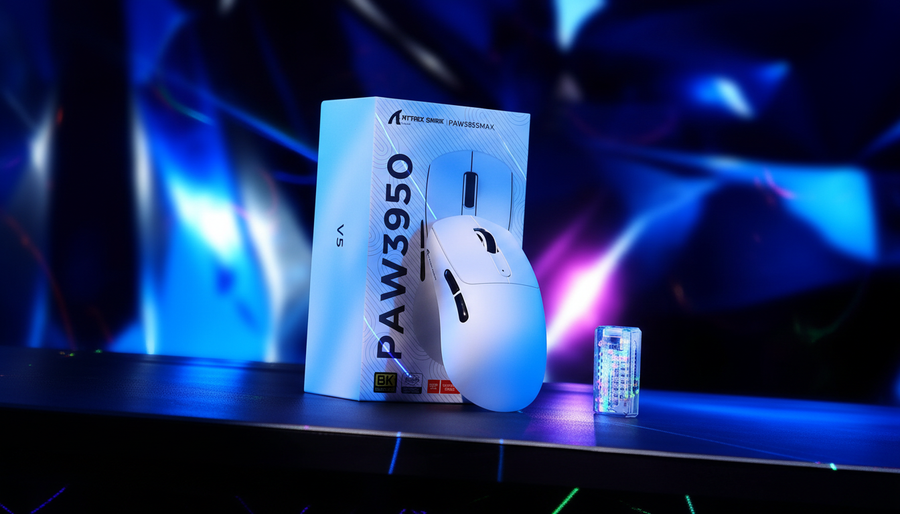
If a gamer utilizes a high-speed linear switch but pairs it with a low-polling-rate system, the physical speed advantage is partially nullified. Modern high-performance peripherals now support up to 8000Hz (8K) polling rates. At 8000Hz, the polling interval is a near-instant 0.125ms. To maintain this level of precision, the switch must have a clean electrical signal with minimal debounce delay.
According to FCC Equipment Authorization reports for wireless peripherals, signal stability is highly dependent on the environment. Users should avoid using USB hubs or front-panel headers for high-polling devices, as shared bandwidth and IRQ (Interrupt Request) bottlenecks at the CPU level can cause packet loss, rendering the speed of the switch irrelevant.
Display Synergy
Furthermore, the visual benefit of a fast switch is most apparent on high-refresh-rate monitors. Standards set by VESA regarding DisplayHDR and high refresh rates emphasize that reducing system latency requires a holistic approach. A 1.2mm actuation switch feels significantly more responsive on a 360Hz monitor than on a 60Hz monitor because the visual confirmation of the action occurs much sooner.
Modeling Switch Reliability: Method and Assumptions
To help users visualize the long-term impact of their choices, we have modeled the estimated feel-degradation of linear switches based on typical gaming usage patterns.
Modeling Note (Reproducible Parameters)
This model is a hypothetical estimate under specific assumptions. It is designed to illustrate the mechanical trade-offs inherent in spring metallurgy and lubrication.
| Parameter | Value or Range | Unit | Rationale / Source Category |
|---|---|---|---|
| Daily Keystrokes | 5,000 - 10,000 | Count | Typical active gaming session |
| Actuation Force | 35 - 55 | g | Standard budget linear range |
| Spring Wire Gauge | 0.20 - 0.28 | mm | Estimated based on force requirements |
| Lube Stability | 6 - 9 | Months | Observed community feedback patterns |
| Failure Definition | >15% Force Loss | Binary | Threshold for "mushy" feel detection |
Boundary Conditions:
- The model assumes a standard clean environment; heavy dust or humidity will accelerate degradation.
- Calculations do not account for "rage clicking" or forces exceeding 300g, which can cause immediate mechanical failure.
- The model applies to standard MX-style mechanical switches, not Hall Effect (magnetic) switches, which operate on different physical principles.
Strategic Selection: Finding the Balance
Choosing between speed and durability requires an honest assessment of usage habits and performance needs.
Scenario A: The Competitive FPS Gamer
For users primarily playing fast-paced titles where every millisecond counts, the "Speed Linear" is the logical choice. The ~30% faster actuation (1.2mm vs 1.8mm) provides a competitive edge. However, these users should view switches as a semi-consumable component. Given the higher risk of spring fatigue and lube degradation, a hot-swappable keyboard is essential to allow for easy replacement of worn switches every 12–18 months.
Scenario B: The Hybrid Typist and Gamer
For those who use their keyboard for both work and play, a "Standard Linear" with a 45g–55g spring and a 2.0mm actuation point offers superior long-term value. The heavier spring provides a more consistent return force, reducing typos during long writing sessions and significantly extending the functional lifespan of the switch. The increased wire gauge in a 50g spring makes it much more resistant to "setting" over time.
Final Considerations for Value Hardware
In the value-tier market, "best" is a subjective term defined by the user's tolerance for maintenance. A speed-focused setup can deliver professional-level performance, but it requires a more proactive approach to upkeep, including potential re-lubing or switch replacement. Conversely, a durability-focused setup provides a "set and forget" experience at the cost of a few millimeters of travel.
By understanding the underlying mechanisms of spring fatigue, lube migration, and system latency, enthusiasts can make informed decisions that maximize their performance-per-dollar without falling victim to the pitfalls of marketing-driven specifications.
Disclaimer: This article is for informational purposes only. Mechanical keyboard modifications, including switch swapping and lubing, may void manufacturer warranties. Always consult your device's manual before performing maintenance.
References: