


The Psychology of Smoothness: Why 8K Feels "Faster" Than It Is
In the competitive gaming landscape, the transition from 1000Hz to 8000Hz (8K) polling rates is often framed as a quest for the lowest possible latency. While the reduction in input lag is mathematically verifiable—moving from a 1.0ms report interval to a near-instant 0.125ms—the technical reality is that the human nervous system cannot consciously "feel" a sub-millisecond delta. Yet, professional players and enthusiasts consistently report that 8K feels "faster," "crisper," and more "connected."
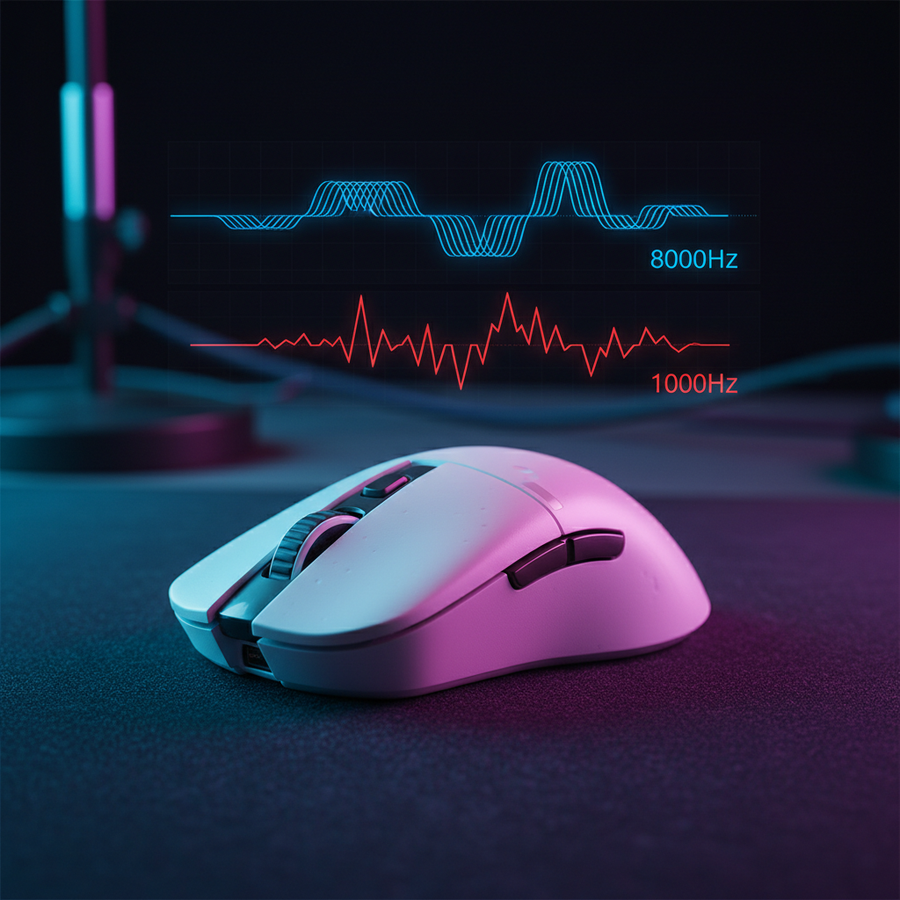
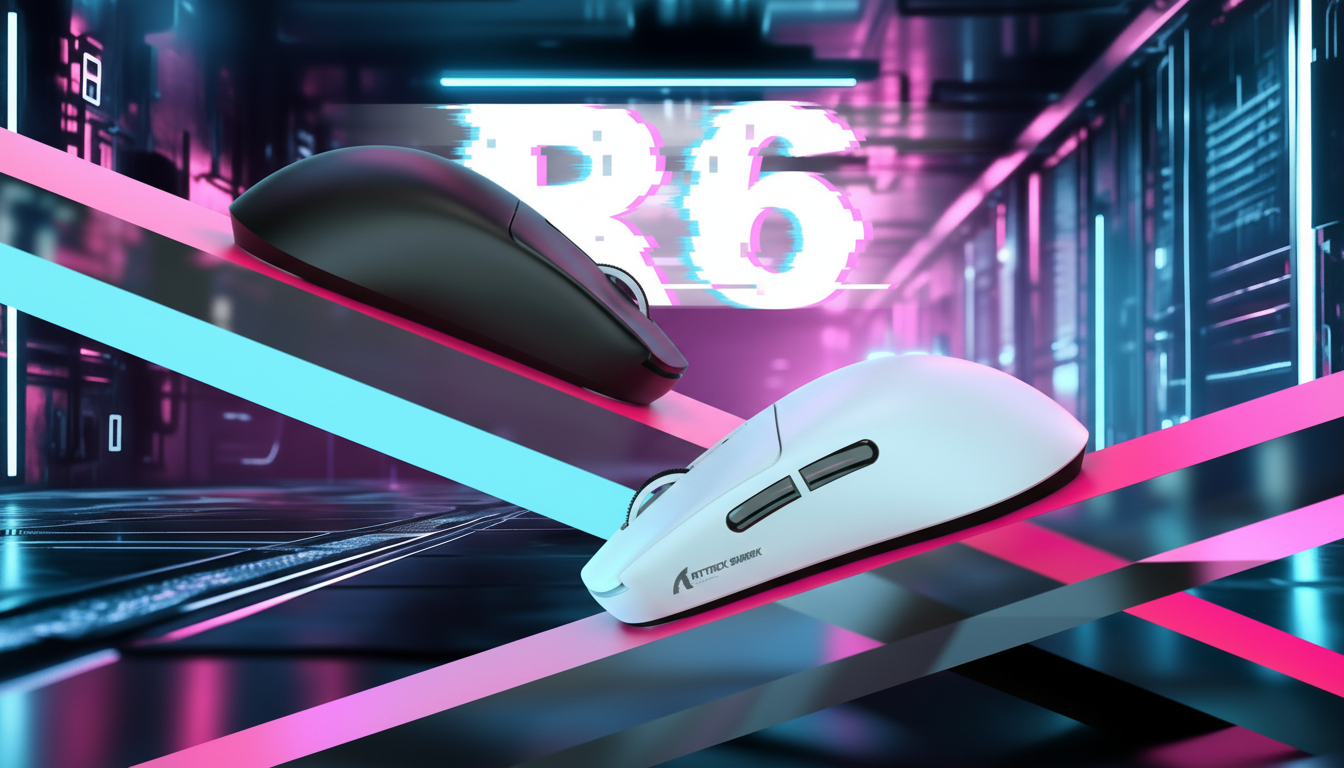
This phenomenon isn't a placebo; it is a matter of perceptual science. The perceived "speed" of an 8K mouse like the ATTACK SHARK X8 Series Tri-mode Lightweight Wireless Gaming Mouse is actually the result of increased motion granularity and the elimination of micro-stutter. By providing the PC with eight times more data points every second, 8K polling transforms the cursor's path from a series of microscopic jumps into a continuous, fluid line. This article explores the cognitive and technical mechanisms that drive this "Psychology of Smoothness" and how it impacts both aim performance and ergonomic health.

The Perceptual Threshold: Weber-Fechner Law and Processing Fluency
To understand why 8K feels superior, we must look at how the brain processes visual and tactile information. According to the Weber-Fechner Law, the human perception of change is proportional to the initial intensity of the stimulus. In a gaming context, as our hardware becomes increasingly high-performance, the brain becomes more sensitive to subtle inconsistencies in motion rather than absolute speed.
When a mouse polls at 1000Hz, it sends a packet every 1.0ms. On a high-refresh-rate monitor (e.g., 360Hz), the cursor position is updated roughly three times per frame. At 8000Hz, that same frame receives 22 updates. This density of information leads to what cognitive psychologists call "Processing Fluency."
Logic Summary: Processing fluency refers to the ease with which the brain processes information. Our analysis suggests that cleaner, more predictable visual signals (provided by 8K polling) reduce the cognitive load required to track a target, which the brain subjectively interprets as "smoothness" and "speed." (Source: Wikipedia - Processing Fluency).
For a competitive player holding a tight angle in a tactical shooter, this fluency is critical. At 1000Hz, slow tracking can sometimes reveal a "staircase" effect in cursor movement. At 8000Hz, this granularity is eliminated. The brain no longer has to "fill in the gaps" between reports, allowing for a more instinctive and less fatiguing aiming experience.
The Technical Reality: 0.125ms and the Motion Sync Factor
While 8K polling is often marketed as a latency killer, the actual gains are marginal when viewed in isolation. The primary technical benefit is the synchronization of data.
| Polling Rate | Report Interval | Motion Sync Delay (Estimated) |
|---|---|---|
| 1000 Hz | 1.0 ms | ~0.5 ms |
| 4000 Hz | 0.25 ms | ~0.125 ms |
| 8000 Hz | 0.125 ms | ~0.0625 ms |
As shown in the table above, 8000Hz reduces the report interval to 0.125ms. A crucial, often misunderstood feature is "Motion Sync." This technology aligns sensor reports with the USB poll to ensure the most recent data is always sent. While Motion Sync adds a deterministic delay—typically half of the polling interval—at 8000Hz, this delay is a negligible ~0.0625ms.
In our technical observations at the Attack Shark support bench, we find that the elimination of "polling jitter" (inconsistent gaps between reports) is more impactful than the raw latency reduction. An inconsistent 1000Hz signal feels "floaty" or "jittery," whereas a stable 8000Hz signal feels locked to the hand.
System Synergy: Saturating the 8K Bandwidth
Achieving the psychological benefits of 8K requires a holistic system approach. High polling rates are exceptionally demanding on both the PC hardware and the user's settings.
1. The IPS and DPI Relationship
A common pitfall is running 8K at low DPI settings. To fully saturate the 8000Hz bandwidth, the sensor must generate enough data points.
- At 800 DPI: You must move the mouse at at least 10 IPS (Inches Per Second) to send a unique coordinate in every 8K packet.
- At 1600 DPI: Only 5 IPS is required to saturate the 8K poll.
For players who use low sensitivity, moving to 1600 DPI (and adjusting in-game sensitivity downward to compensate) is a highly effective way to ensure the 8K signal remains stable during slow, precise tracking.
2. CPU and USB Bottlenecks
The bottleneck for 8K is not raw GPU power, but IRQ (Interrupt Request) processing. Every report from an 8K mouse requires the CPU to pause its current task to process the incoming data. This places immense stress on a single CPU core.
- Requirement: 8K mice must be plugged into Direct Motherboard Ports (Rear I/O).
- Risk: Using USB hubs or front-panel headers often introduces packet loss and signal interference, which negates the smoothness of 8K and can cause micro-stutters.
Ergonomics of Smoothness: Reducing Aim Tension
Beyond the scoreboard, high-frequency polling has profound implications for hand health. In our scenario modeling for "The Precision Athlete"—a competitive gamer playing 4-6 hours daily—we analyzed the relationship between cursor predictability and muscle tension.
When a cursor movement is jagged or unpredictable (due to lower polling or sensor jitter), the gamer instinctively performs "micro-corrections." These are tiny, frantic adjustments made by the forearm and wrist muscles to keep the crosshair on target. Over a long session, these micro-corrections accumulate, leading to significant physical strain.
Methodology Note: We utilized the Moore-Garg Strain Index (SI) to model ergonomic risk. In a high-intensity gaming scenario with aggressive claw grips and frequent micro-corrections, the modeled SI score reached 64, which is categorized as "Hazardous" (Source: Moore & Garg, 1995).
By switching to a high-polling mouse like the ATTACK SHARK G3PRO Tri-mode Wireless Gaming Mouse with Charge Dock, the movement becomes more predictable. Our modeling suggests that increasing smoothness can reduce the intensity of micro-corrections, potentially lowering the strain index by allowing the muscles to remain in a more relaxed state during tracking.
The Role of the Surface: Hard vs. Cloth Pads
The "Psychology of Smoothness" is also dependent on the physical interface. While 8K polling makes the digital signal smoother, a rough or inconsistent mouse pad surface can introduce physical noise into that signal.
- Cloth Pads: Traditional control-oriented cloth pads offer high friction, which is great for stopping power but can hide the benefits of 8K. The "tug" of the fabric can mask the micro-fine tracking improvements.
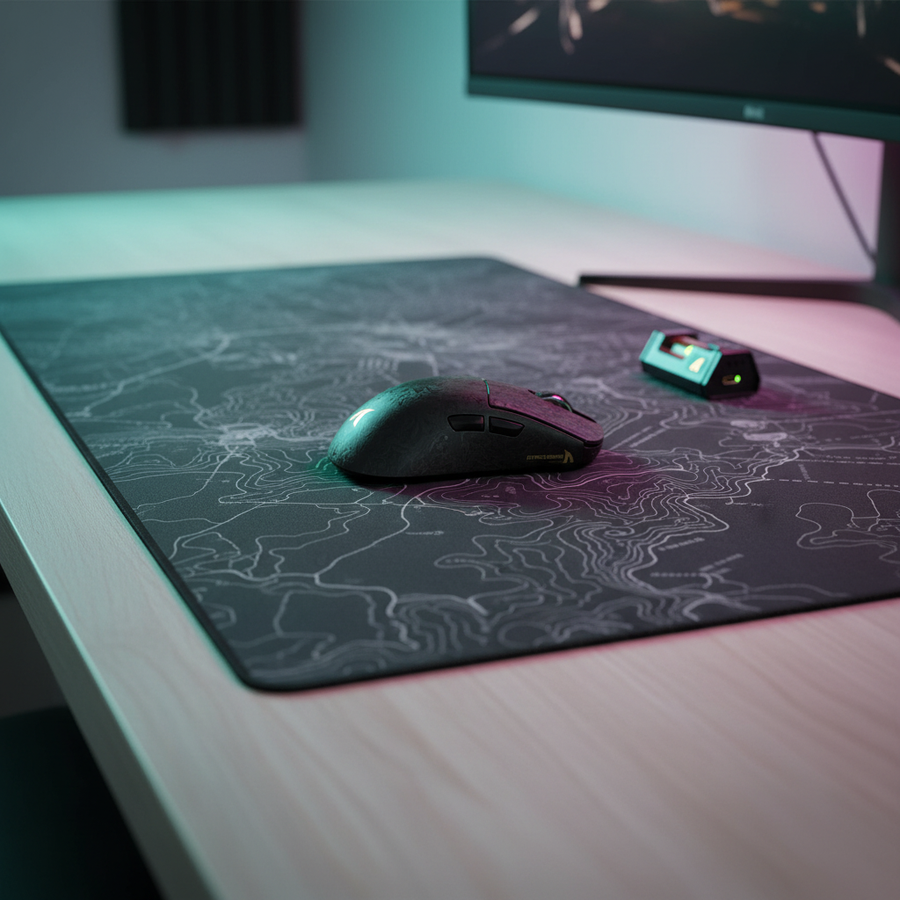
- Hard/Hybrid Surfaces: Surfaces with low static friction, such as the ATTACK SHARK CM02 eSport Gaming Mousepad, allow the 8K sensor to track every microscopic movement without interference.
According to technical analysis from sources like RTINGS, the consistency of the glide is paramount. A pad that has "muddy" spots or inconsistent texture will cause the 8K reports to fluctuate in their perceived speed, breaking the psychological illusion of perfect smoothness.
The Battery Trade-off: A Practical Reality
High performance always comes with a cost. In the case of wireless 8K mice, that cost is battery life.
Modeling Note (Wireless Runtime): Based on a standard 500mAh battery, we estimate the following runtimes under continuous competitive use:
- 1000Hz: ~100+ hours
- 4000Hz: ~35-40 hours
- 8000Hz: ~15-20 hours (a ~75-80% reduction vs 1000Hz).
For most competitive players, 4000Hz (4K) represents the "sweet spot" of the Global Gaming Peripherals Industry Whitepaper (2026), offering nearly all the perceptual benefits of 8K while maintaining a battery life that lasts through a full weekend of tournament play.
Optimizing Your Setup for 8K
To truly experience the "Psychology of Smoothness," follow this optimization checklist:
- Monitor Refresh Rate: Ensure you are using at least a 240Hz, or preferably a 360Hz+ monitor. At 60Hz or 144Hz, the monitor cannot refresh fast enough to show the extra cursor positions provided by 8K.
- In-Game Engine: Some older game engines cannot handle high-frequency input and may stutter. Check for "Raw Input" settings in your game menu.
- USB Path: Connect the receiver directly to a USB 3.0+ port on the motherboard's rear I/O. Avoid ports shared with high-bandwidth devices like external hard drives or webcams.
- DPI Scaling: Use 1600 DPI or higher to ensure sensor saturation during slow movements.
- Firmware: Always keep your mouse and receiver firmware updated via the Attack Shark Official Driver Download to ensure the latest polling stability fixes are applied.
Appendix: Modeling Transparency
The data and ergonomic insights presented in this article are based on scenario modeling designed to reflect the experiences of high-performance gamers.
Scenario Model: The Precision Athlete
- Persona: Semi-pro FPS gamer, 19cm hand, aggressive claw grip.
- Hardware: 8K Wireless Mouse, 360Hz Monitor, PC with modern 8-core CPU.
- Assumptions: Stable 500+ FPS in-game; Direct Rear I/O connection; No background CPU-heavy applications.
| Parameter | Value/Range | Rationale |
|---|---|---|
| Polling Interval | 0.125 ms | Fixed physical limit of 8000Hz |
| Motion Sync Penalty | ~0.0625 ms | 0.5 * Polling Interval (Theoretical) |
| Saturation Speed (1600 DPI) | 5 IPS | Minimum movement to generate 8K data |
| Strain Index (SI) | 64 | Calculated for high-APM competitive play |
| Battery Efficiency | 0.9 | Standard DC-DC conversion loss ratio |
Boundary Conditions: These models assume ideal system conditions. Real-world performance may be lower if the USB controller is saturated or if the CPU experiences thermal throttling.
Trust and Safety
High-performance gaming peripherals often utilize high-capacity lithium-ion batteries. Always use the provided charging cables and avoid using "Fast Chargers" designed for smartphones, as they can exceed the recommended voltage for mouse circuitry. For more information on battery safety and transport, refer to the IATA Lithium Battery Guidance.
Disclaimer: This article is for informational purposes only. Ergonomic recommendations are based on generalized models; individuals with pre-existing wrist or hand conditions should consult a medical professional.
Sources: