



The Reality of Automated Lubrication in Budget Switches
In the mechanical keyboard industry, a "specification credibility gap" often exists between marketing claims and real-world tactile feedback. For value-oriented enthusiasts, "factory-lubed" switches are a major selling point, promising to eliminate hours of manual work. However, in mass-produced budget switches, quality is a spectrum defined by the limitations of high-volume manufacturing.
The Quick Verdict: To judge factory lube quality without specialized tools, perform a consistency check. If a sample of switches from the same board exhibits varied sounds (metallic ping vs. muffled thud) or inconsistent resistance, the factory application is likely uneven. In our workshop experience, a "mushy" return often indicates over-lubrication on the stem legs, while a "scratchy" feel suggests dry slider rails.
Standardization in peripheral manufacturing is increasingly focused on reducing variance, as noted in recent industry whitepapers like the Global Gaming Peripherals Industry Whitepaper (2026) (Source: Manufacturer-led Whitepaper). In budget-tier switches, lubricant is typically applied via automated dipping or spraying. While efficient, these methods often lack the precision of a manual brush, frequently leaving spring ends dry while over-saturating the stem.
Decoding the Materials: GPL 205G0 and Viscosity
To audit quality, you must understand the materials being used. A common community benchmark for high-performance lubrication is GPL 205G0.
| Parameter | Estimated Value / Specification | Rationale |
|---|---|---|
| Composition | ~7:3 Blend (105 oil / 205 grease) | A common heuristic ratio to balance stay-in-place thickness with fluidity. |
| Density | ~1.90 to 2.00 g/ml | Based on typical perfluorinated polyether (PFPE) data; ensures long-term adhesion. |
| Application | Automated Spray/Dip | High-speed throughput for budget-tier cost control. |
| Viscosity | Variable (Thin to Medium) | Manufacturers may use thinner oils (Krytox 105 equivalent) to speed up automation. |
As noted in retail listings for GPL 205G0 lubricants (Source: Retail Listing/Technical Parameter Page), a density of approximately 1.95g/ml is often cited. This high density is vital because it helps the lubricant resist migration caused by the vibrations of rapid typing. However, in budget switches, manufacturers may substitute this with thinner, lower-density oils. While these feel smooth initially, thin oils are more prone to migrating or drying out over time, which can lead to the return of "scratchiness" or spring noise within weeks of use.
Expert Note: Our analysis of factory lube consistency is based on patterns observed in high-volume production lines and customer returns, rather than a controlled laboratory environment. We use the 7:3 blend ratio as a practical benchmark for durability, not an absolute manufacturing requirement.
The Auditor’s Checklist: Inspecting Switch Stems
Proper lubrication is about balance. Excessive grease at the actuation point can lead to dust adhesion or even double-clicking issues if the material migrates to the electrical leaf contacts.
1. The Slider Rail Haze
Inspect the stem rails under a high-intensity lamp. You are looking for a fine, even haze. If the rails appear dry or "patchy," the switch will likely exhibit "scratch"—the tactile sensation of plastic-on-plastic friction. Community reviewers like ThereminGoat (Source: Independent Community Review) often note that budget switches frequently show an uneven distribution where only one side of the rail is coated.
2. The Stem Leg "Globs"
Check the stem legs—the protrusions that interact with the metal leaf. In linear switches, these should have a minimal, almost invisible coating. Visible "globs" or thick white deposits are a sign of poorly calibrated automated spraying. This excess material can cause a "mushy" or sluggish feel on the upstroke as the grease creates viscous drag.
3. The Spring End Inspection
The most frequent failure in budget factory lubing is the spring. Even with a lubed stem, dry springs can produce a metallic "ping" or "crunch." High-quality factory tuning, such as that found in Akko's pre-lubed series (Source: Retail/Community Comparison), targets the spring ends to eliminate this. If you hear a ringing sound when tapping the keyboard case, the springs likely missed the lubrication cycle.

The Three-Switch Test: A Heuristic for Batch Quality
Because mass production relies on batch processing, quality can vary within a single keyboard. We recommend the Three-Switch Test, a practical shop-level rule of thumb to gauge if a full re-lube is necessary.
The Method:
- Select Three Locations: Sample one key from the primary typing cluster (e.g., 'W'), one modifier (e.g., 'Enter'), and one low-use key (e.g., 'F12').
- Compare Tactile Consistency: Press them slowly and listen closely. Do they feel and sound identical?
- The 2/3 Rule: If two out of the three switches feel significantly different—one scratchy, one mushy, and one smooth—the batch variance is high.
Based on common patterns from repairs and community feedback, high batch variance is a leading indicator of a sub-optimal typing experience. If the variance is high, a manual intervention is often the only way to achieve a uniform feel across the board.
Heuristic Note: This test is a quick self-check. It may not apply to specialized silent switches or "long-pole" linears, where the bottom-out feel is naturally more aggressive regardless of lubrication.
Performance Impacts: Scratchiness vs. Mushiness
The goal of lubrication is to reach a "Goldilocks" zone of friction. Too little lube results in scratchiness, which can increase finger fatigue over long sessions. Conversely, over-lubrication results in mushiness, which can potentially slow down the key's return speed.
For competitive players, return speed is critical. While difficult to measure without high-speed cameras, an over-lubed switch can feel "sluggish," potentially adding a few milliseconds of perceived delay to the key reset. This is why we generally advocate for a "less is more" approach when performing DIY touch-ups on budget boards that already have a factory base coat.
Empowering the Value-Oriented Modder
Judging factory lube quality allows you to reclaim control over your typing experience. By understanding the signs of automated application errors and the properties of lubricants like GPL 205G0, you can make an informed decision: stay with the factory settings or invest the time in a manual re-lube.
For those looking to enhance a budget build further, consider the following:
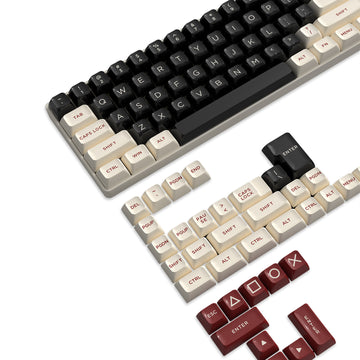
- Keycap Upgrades: Thick PBT keycaps can complement a well-lubed switch by deepening the sound profile (the "thock").
- Ergonomic Support: If your switches feel inconsistent, an ergonomic wrist rest can help mitigate the strain caused by varying actuation forces.
Ultimately, the best keyboard is one tuned to your specific preferences. Whether you are a competitive gamer seeking speed or a typist looking for a smooth glide, technical literacy is your most valuable tool.
Disclaimer: This article is for informational purposes. Modifying mechanical switches (including opening them or applying third-party lubricants) may void your manufacturer's warranty. Always consult your product's specific warranty terms before performing DIY modifications.
Sources
- ThereminGoat's Switch Reviews (Independent Community Analysis)
- GPL 205G0 Technical Parameters (Retail Reference Data)
- Global Gaming Peripherals Industry Whitepaper (2026) (Manufacturer Industry Report)
- Akko Pre-lubed Switch Comparison (Retail/Community Guide)