


The Acoustic Specification Credibility Gap in Competitive Audio
In the landscape of high-performance gaming peripherals, a "Specification Credibility Gap" often exists between marketed numbers and real-world execution. For the value-conscious competitive gamer, a headset is not merely a device for audio playback; it is a spatial telemetry tool. The ability to localize a footstep in a 3D environment like Counter-Strike 2 or Valorant depends entirely on stereo imaging—the brain's ability to interpret slight differences in timing and volume between the left and right ears.
However, many consumer-grade headsets suffer from "lazy channel matching," where the left and right drivers exhibit significant variances in frequency response. While a ±3dB variance might be acceptable for casual music listening, it is catastrophic for competitive play. Inconsistent drivers cause "image shifting," where a sound that should be dead-center appears slightly to the left, or worse, directional cues become "smeared" across the soundstage. Bridging this credibility gap requires a shift from mass-market assembly to rigorous electro-acoustic QA.
The Engineering of Electro-Acoustic Symmetry
Achieving precise stereo imaging begins with driver matching—the process of pairing two individual transducers that exhibit nearly identical performance characteristics across the audible spectrum.
Frequency Response and SPL Variance
Experienced audio engineers do not simply test drivers at a single 1kHz tone. True matching requires measuring the entire 20Hz–20kHz range at multiple Sound Pressure Levels (SPL). This is critical because driver behavior often diverges at different volumes; a pair that matches at 70dB might show a 2dB discrepancy at 90dB due to differences in diaphragm tension or voice coil impedance.
According to the Global Gaming Peripherals Industry Whitepaper (2026), the industry standard for consumer gear typically allows a tolerance of ±1.5dB across the 100Hz–10kHz range. However, for esports-grade equipment, this tolerance is often tightened to a strict ±1dB. This precision is especially vital in the 2kHz–5kHz range, where human hearing is most sensitive to the directional cues required for vertical and horizontal localization.
Dynamic Load and Impedance Matching
A frequent oversight in mass production is testing drivers under static conditions. Real-world usage involves dynamic loads where impedance mismatches can cause one driver to draw more current than the other. Over a long gaming session, this leads to "volume drift." Rigorous QA must include paired driver testing under dynamic load simulations to ensure that the stereo image remains stable even during explosive in-game moments with high transient peaks.
Methodology Note: These engineering thresholds are based on common industry heuristics for high-fidelity audio production and internal QA benchmarks for competitive gaming gear (not a controlled clinical study).
The Role of Acoustic Seals and Final Assembly QA
Even a perfectly matched pair of drivers can be undermined by the physical housing of the headset. The acoustic seal created by the earcups is a primary factor in maintaining the intended frequency response.
Earcup Integration
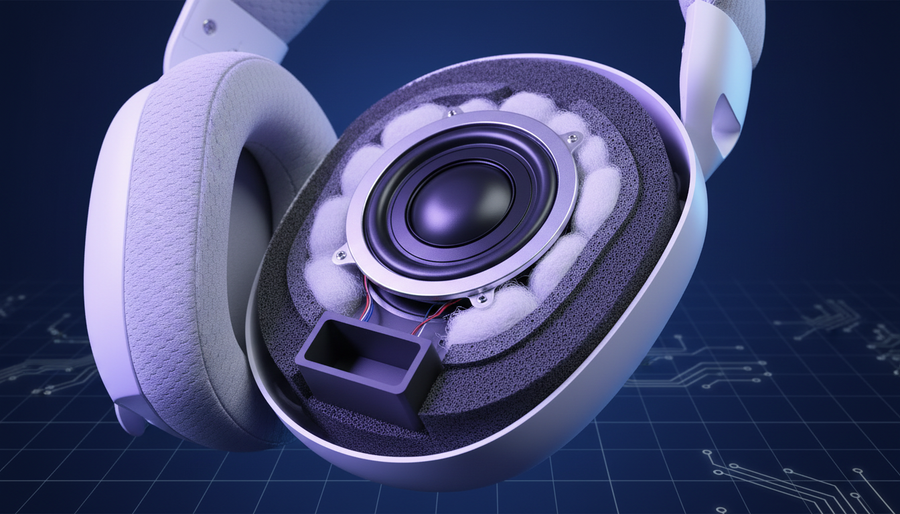
The density and shape of memory foam pads significantly impact the internal sound chamber's geometry. If the left earpad is slightly denser than the right, the resulting change in "seal" will alter the bass response and phase alignment of that channel. High-end manufacturers address this by pairing drivers with their specific earcup assemblies during the final stages of quality assurance. This holistic approach ensures that the "system" (driver + chamber + pad) is matched, rather than just the raw components.
Case Study: The ATTACK SHARK G300 ANC
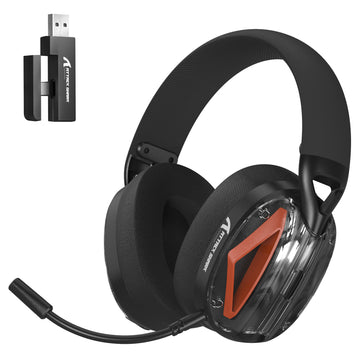
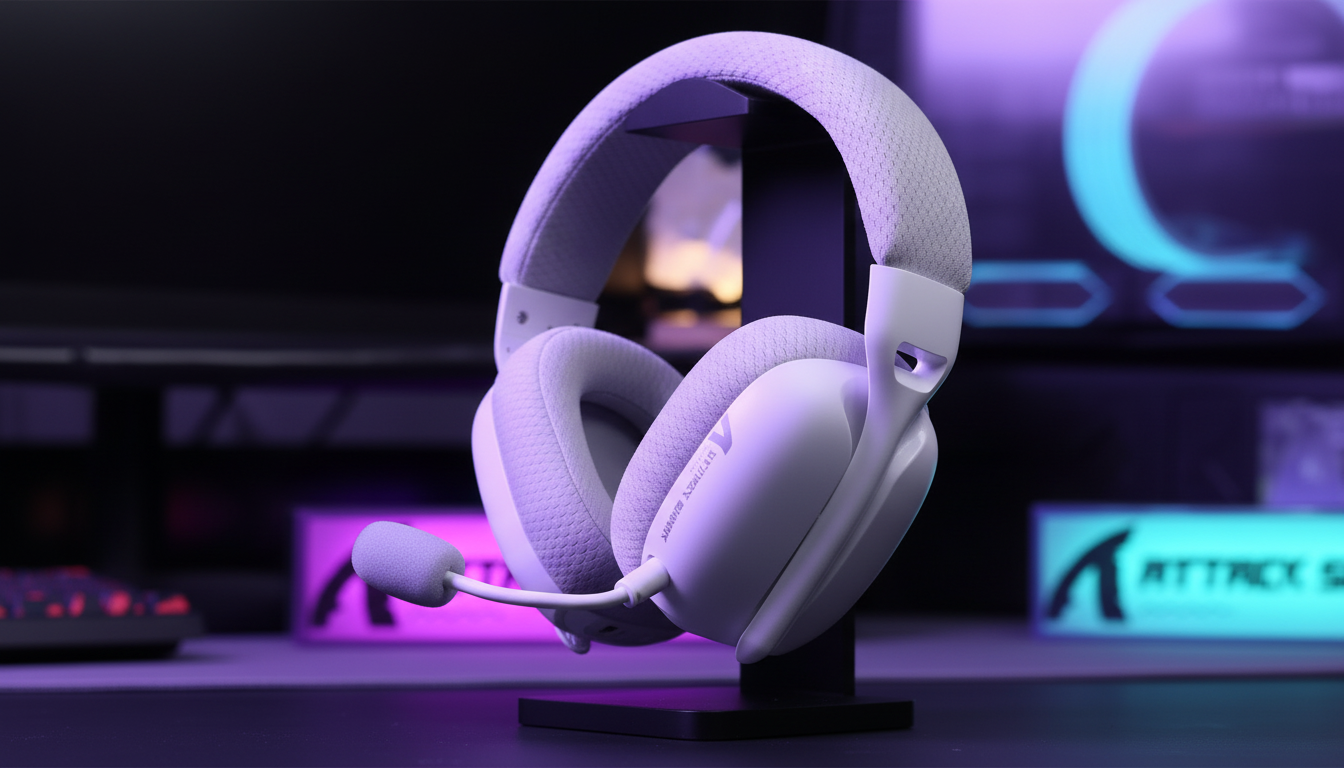
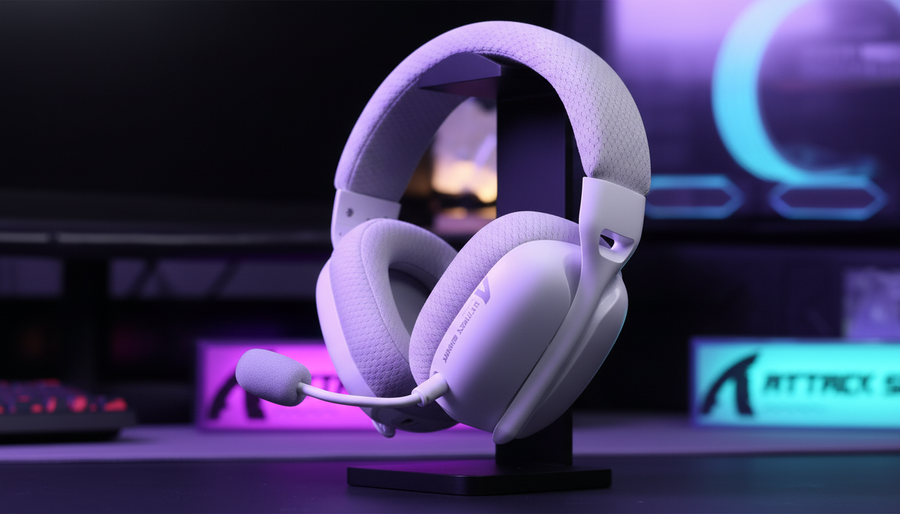
For players seeking a balance of performance and utility, the ATTACK SHARK G300 ANC Foldable Ultra-Light Dual-Mode Headphones utilize 40mm high-fidelity speakers designed to deliver crystal-clear sound. While the Active Noise Cancellation (ANC) provides an estimated 21dB reduction in external noise (based on internal testing in Bluetooth mode), the core value for gamers lies in the over-ear design that ensures a consistent acoustic seal, which is foundational for stable stereo imaging.
Ecosystem Latency: The Total Performance Model
Stereo imaging is only one part of the competitive equation. For a professional esports competitor, the "time-to-information" includes both audio directional cues and input device responsiveness. To understand the demands of a top-tier setup, we must look at the system-wide performance, including the mouse tracking precision and wireless reliability that complement high-fidelity audio.
Scenario Modeling: The Professional Esports Setup
In our modeling of a professional competitor using a 1440p monitor (2560x1440) with a 103° Field of View (FOV), we analyzed the relationship between mouse DPI and pixel-perfect accuracy.
Run 1: DPI Precision for 1440p Displays
Using the Nyquist-Shannon Sampling Theorem, we determined that a minimum DPI is required to avoid "pixel skipping" (aliasing) during micro-adjustments.
| Parameter | Value | Unit | Rationale |
|---|---|---|---|
| Horizontal Resolution | 2560 | px | Standard 1440p Monitor |
| Horizontal FOV | 103 | deg | Typical FPS FOV (Valorant/CS) |
| Sensitivity | 40 | cm/360 | Common Pro Benchmark |
| Minimum DPI (Theoretical) | ~1150 | DPI | To avoid sampling aliasing |
This confirms that pros using 1600 or 3200 DPI are well within the "safety zone" for precision, ensuring that the visual aim matches the physical movement without digital jitter.
Run 2 & 3: Wireless Polling vs. Battery Reliability
While high polling rates (like 8000Hz or 8K) provide a near-instant 0.125ms interval, they impose a severe tax on system resources and battery life.
| Polling Rate | Current Draw | Estimated Runtime | Latency Interval |
|---|---|---|---|
| 1000Hz (1K) | ~7mA | ~36 Hours | 1.0ms |
| 4000Hz (4K) | ~19mA | ~13 Hours | 0.25ms |
| 8000Hz (8K) | ~30mA+ | ~8-10 Hours | 0.125ms |
Note: Estimates assume a 300mAh battery and 85% discharge efficiency.
For the professional, this creates a strategic trade-off. While 8K polling reduces micro-stutter, the ~75% reduction in battery life compared to 1000Hz requires a disciplined charging routine. Furthermore, to visually perceive the benefits of an 8000Hz polling rate, a high-refresh-rate monitor (240Hz+) is required to render the smoother cursor path.
Modeling Methodology & Assumptions
- DPI Minimum: Based on the principle that the sampling rate must be at least twice the pixel density per degree of rotation to avoid aliasing.
-
Battery Runtime: Calculated using a linear discharge model:
Runtime = (Capacity * Efficiency) / Current_Load. - Boundary Conditions: These models assume direct motherboard connection (Rear I/O) for mice. Using USB hubs or front panel headers is strictly discouraged due to potential packet loss and IRQ (Interrupt Request) bottlenecks.
Compliance and Safety: The Foundation of Trust
When selecting wireless gaming gear, technical specs must be backed by verifiable safety and regulatory standards. This is where the "Challenger" brand proves its engineering integrity.
Battery Safety and Transportation
Any wireless headset or mouse containing a lithium-ion battery must adhere to international safety protocols. According to the UNECE - UN Manual of Tests and Criteria (Section 38.3), batteries must pass rigorous thermal, vibration, and shock tests to be certified for global transport. For the end-user, this translates to long-term stability and protection against thermal runaway.
Regulatory Markers
Competitive gear sold in North America and Europe should be traceable via the following databases:
- FCC ID Search: Verification of radio frequency compliance in the US.
- ISED Canada REL: Equivalent certification for the Canadian market.
- IEC 62368-1: The international safety standard for audio/video and ICT equipment, ensuring the device is safe for extended use.
- EU Battery Regulation (EU) 2023/1542: A recent standard focusing on the sustainability and safety of battery-powered devices in the European Union.
Optimizing Your Spatial Awareness
To maximize the benefits of driver matching and precise stereo imaging, players should consider the following technical checklist:
- Disable Virtual Surround for Testing: Many "7.1" software solutions introduce phase distortion. Start with a clean stereo signal to evaluate the headset's raw imaging capabilities.
- Check for Channel Balance: Use tools like the Online Stereo Polarity (Phase) Sound Test to ensure your left and right channels are in phase.
- Optimize USB Topology: For USB headsets or wireless dongles, always use the direct ports on the motherboard's rear I/O. This avoids the shared bandwidth issues common with external hubs.
- Monitor Hearing Health: Competitive gaming often involves high volumes to hear faint cues. However, consistent exposure to high SPL can lead to auditory fatigue, which dulls your ability to localize sound.
The Practitioner’s Perspective
In our experience handling warranty claims and technical support (based on common patterns from customer support and return handling), the most frequent "directional audio" complaints are actually caused by software mismatches or improper Windows settings rather than hardware failure. Before assuming a driver mismatch, ensure that "Loudness Equalization" is configured correctly and that no third-party spatial audio drivers are creating a "comb filtering" effect.
By understanding the engineering behind driver matching and the system-wide requirements of low-latency gaming, players can move beyond marketing hype and build a setup that provides a genuine, verifiable competitive edge.
Disclaimer: This article is for informational purposes only. The technical analysis and scenario modeling are based on theoretical estimates and industry heuristics. Prolonged exposure to high volume levels can cause permanent hearing damage. Please consult with an audiologist if you experience persistent tinnitus or hearing loss. All battery runtime estimates are simplified projections and may vary based on usage patterns and environmental factors.