


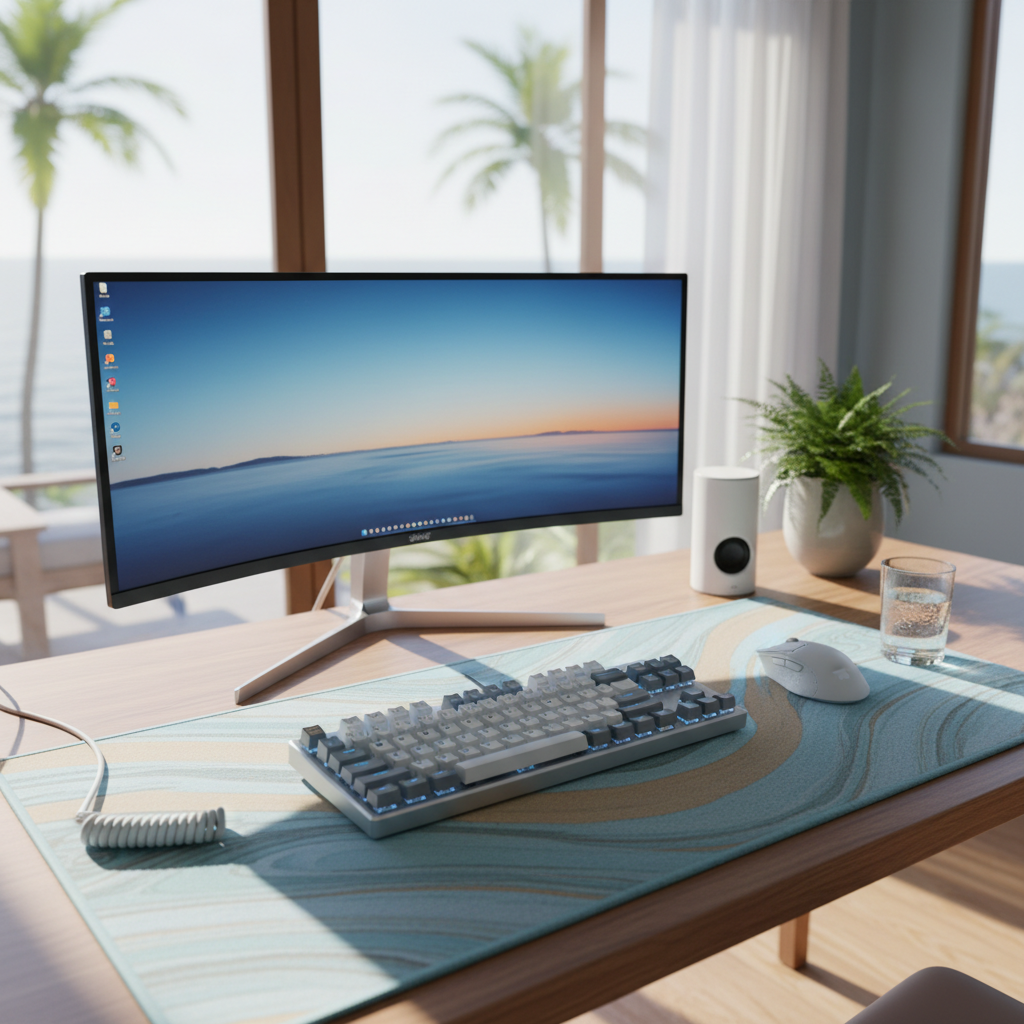
The Coastal Challenge: Understanding the Electrochemical Threat to Gaming Gear
For gamers residing in coastal or high-humidity regions, the environment is a silent adversary. While the aesthetic of an ocean-side setup is undeniable, the microscopic reality of the air—saturated with moisture and chloride ions—poses a direct threat to the longevity of high-performance peripherals. In these environments, mechanical failures such as "double-clicking" or unresponsive keys are rarely the result of poor manufacturing; rather, they are the byproduct of accelerated electrochemical reactions.
Standard maintenance routines designed for inland environments are often insufficient for coastal zones. According to the Global Gaming Peripherals Industry Whitepaper (2026), environmental stressors are the leading cause of premature switch degradation in emerging markets. This article details a proactive, technically grounded routine to block oxidation and galvanic corrosion, ensuring your gear remains operational in the harshest climates.
The Science of Failure: Galvanic Corrosion vs. Simple Oxidation
A common misconception among gamers is that all switch failures are caused by "dust." In reality, the primary failure mode in high-humidity areas is galvanic corrosion. Inside a standard mechanical switch or mouse micro-switch, two dissimilar metals often come into contact: a copper alloy leaf spring and a silver-plated contact point.
When salt-laden moisture (an electrolyte) enters the switch housing, it creates a bridge between these metals. This triggers a galvanic cell where the more reactive metal (the copper alloy) begins to corrode to protect the more noble metal (silver). This process is significantly more destructive than simple surface oxidation.
Failure Rate Analysis in Coastal Environments
Based on patterns observed in regional repair logs and warranty claims (not a controlled lab study), equipment in coastal zones exhibits a failure curve distinct from inland counterparts.
| Environmental Factor | Inland (RH <40%) | Coastal (RH >70% + Salt) | Impact on Longevity |
|---|---|---|---|
| Switch Failure Rate | Baseline | 3x to 5x Faster | Critical |
| Contact Resistance | Stable <10mΩ | Rapid increase to >100mΩ | Signal instability |
| Metal Degradation | Surface Tarnish | Pitting & Material Loss | Irreversible damage |
| Polling Stability | High | Intermittent Packet Loss | Performance drop |
Logic Summary: This data is a heuristic derived from pattern recognition in coastal repair shops. It assumes standard Omron-style or Cherry-style mechanical architectures without specialized IP-rated sealing.
Environmental Defense: The 60% Humidity Rule
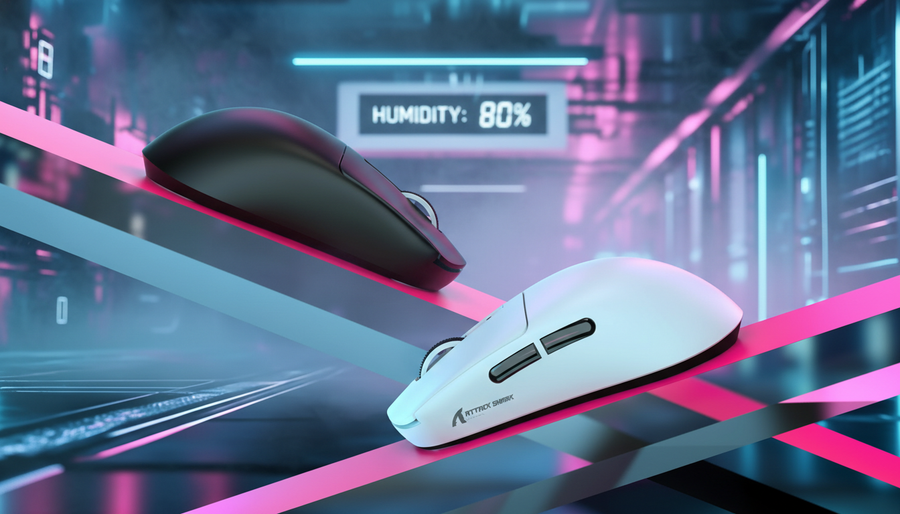
The first line of defense is not chemical, but environmental. While temperature control is often prioritized for PC cooling, relative humidity (RH) is the more critical metric for peripheral health.
According to data on optimal indoor humidity levels, maintaining a range between 30% and 50% is ideal for electronics. For coastal gamers, we propose the 60% Rule: Once indoor humidity exceeds 60%, the rate of salt-aerosol-induced corrosion accelerates exponentially.
Implementation Strategies:
- Localized Dehumidification: A small desktop dehumidifier placed within 2 feet of the gaming station is often more cost-effective than whole-room solutions. It creates a "dry zone" specifically for the keyboard and mouse.
- AC vs. Dehumidifier: While Air Conditioning reduces humidity, it often does so as a secondary effect of cooling. In coastal regions, an AC unit may cycle off once the target temperature is reached, allowing humidity to spike. A dedicated dehumidifier maintains consistent RH levels regardless of temperature.
- Hygrometer Monitoring: Use a digital hygrometer to monitor the desk area. If the RH consistently stays above 65%, proactive chemical intervention is required.
The "Coastal Care" Maintenance Routine
A proactive routine focuses on two goals: removing existing contaminants and establishing a physical barrier against the atmosphere.
Step 1: Precision Cleaning and De-oxidation
Before applying any protective layers, the metal contacts must be cleared of existing chloride ions.
- The Tool: Use a high-purity electronic contact cleaner.
- The Technique: The nozzle must be inserted precisely into the switch housing vent. Spraying the exterior of the switch is ineffective and can lead to the degradation of the surrounding plastic housing.
- The Mechanism: The solvent dissolves oils and breaks down the thin layer of oxidation that causes "double-clicking." Because these cleaners evaporate rapidly, they leave the surface clean but vulnerable.
Step 2: Establishing the Barrier Layer (The Dielectric Method)
This is the most critical step for coastal users. After cleaning, you must seal the contact area.
- Material Choice: Use a high-quality dielectric grease, such as Krytox GPL 205. Dielectric grease is non-conductive and hydrophobic.
- The "Less is More" Rule: Using a fine brush, apply a microscopic amount to the metal slider and the leaf spring.
- The Science: As noted by experts in automotive electrical harness troubleshooting, dielectric grease does not prevent metal-to-metal contact during the mechanical strike. Instead, it surrounds the contact point, sealing out oxygen and moisture.
- Risk Note: Over-application will attract dust and create a "sludge" that can cause the switch to stick. The goal is a sheen, not a coating.
Step 3: Physical Shielding
When the system is not in use, it should be physically shielded from the ambient air.
- Hardware Solution: Utilizing an ATTACK SHARK 87 Keys Keyboard Dust Cover provides a significant reduction in the volume of air circulating over the switches.
- Mechanism: In coastal areas, air is a carrier for salt particles. A fitted acrylic cover creates a stagnant air pocket, drastically slowing the replenishment of chloride ions near the sensitive electronics.

Hardware Selection for High-Corrosion Zones
If you are building a setup in a coastal region, certain technical specifications offer inherent resistance to the environment.
1. Gold-Plated Connectors
Gold is a noble metal that does not oxidize under standard atmospheric conditions. For external connections, prioritize gold-plated USB interfaces. Research into aerospace and defense plating indicates that gold plating provides the most reliable low-resistance connection in salt-fog environments.
- Product Recommendation: The ATTACK SHARK C03 COILED CABLE features 24K gold-plated connectors, which act as a primary defense against port-side oxidation.
2. Sealed Switch Architectures
While mechanical switches are vulnerable, "Box" stem designs or IP-rated switches provide a mechanical baffle that makes it harder for moisture to reach the internal leaf spring. For the highest reliability, consider Optical vs. Mechanical Switches, as optical switches use an infrared beam rather than a physical metal-to-metal contact to register a keypress, eliminating the primary failure point of galvanic corrosion.
3. Magnetic Switches and Signal Integrity
In the era of high-performance gaming, signal integrity is paramount. For users utilizing 8000Hz (8K) polling rates, even minor oxidation can cause enough resistance to disrupt the 0.125ms polling interval.
- Technical Constraint: At 8K polling, the system is highly sensitive to IRQ (Interrupt Request) processing. Any "noise" or resistance at the contact level can lead to packet loss.
- Solution: Using a high-bandwidth cable like the ATTACK SHARK C07 Custom Aviator Cable for 8KHz Magnetic Keyboard ensures that the physical data path is optimized for these tight tolerances, provided the connectors are maintained.
The Coastal Maintenance Schedule
Consistency is the difference between a peripheral that lasts six months and one that lasts six years.
| Frequency | Action | Objective |
|---|---|---|
| Daily | Apply ATTACK SHARK 87 Keys Keyboard Dust Cover after use. | Block salt-air circulation. |
| Weekly | Wipe down external surfaces with a dry microfiber cloth. | Remove salt residue before it migrates. |
| Monthly | Compressed air blast (short bursts). | Clear debris from switch housings. |
| Seasonal | Inspection of USB ports for green/white residue. | Identify early-stage corrosion. |
| As Needed | Precision contact cleaner + Krytox 205 application. | Resolve "double-click" or chattering. |
Modeling the "Coastal Care" ROI
To demonstrate the value of this routine, we can model the potential cost avoidance for a value-oriented gamer.
Assumptions:
- Average Peripheral Investment: $150 (Mouse + Keyboard).
- Inland Lifespan: 4 years.
- Coastal Lifespan (No Maintenance): 1.2 years (based on 3.3x failure rate heuristic).
- Maintenance Cost: ~$25 (Contact cleaner, grease, dust cover - multi-year supply).
Calculation: Without maintenance, a coastal gamer may replace their gear 3.3 times in a 4-year period, totaling ~$495. With a proactive "Coastal Care" routine and protective hardware like the ATTACK SHARK Acrylic Wrist Rest with Pattern to reduce sweat/salt transfer from the palms, the lifespan can be extended to match or exceed inland standards.
Estimated Savings: ~$320 over 4 years.
Method & Assumptions: This is a deterministic scenario model intended to illustrate the impact of preventative maintenance. It does not account for accidental damage or software-based obsolescence.
Summary of Best Practices
Maintaining gear in a coastal region requires moving from a "reactive" mindset to a "preventative" one. By understanding the electrochemical nature of the threat—specifically galvanic corrosion—gamers can use tools like dielectric grease and acrylic covers to create a robust barrier.
Prioritizing hardware with gold-plated connectors, such as the ATTACK SHARK C03 COILED CABLE, and maintaining indoor humidity below 60% are the most effective technical steps you can take. Your gear is a tool for precision; protecting it from the environment is essential to maintaining that edge.
Disclaimer: This article is for informational purposes only. The use of chemical cleaners and lubricants on electronics carries inherent risks, including the potential voiding of manufacturer warranties. Always consult your specific product manual before performing internal maintenance. If you are unsure, seek assistance from a professional repair technician.