



The Acoustic specification Credibility Gap: Why "More Bass" Fails Stealth Play
In the competitive gaming landscape, specifications often serve as the primary bridge between a product and a user's performance expectations. However, a significant "Specification Credibility Gap" exists in gaming audio. While marketing materials frequently tout "deep, cinematic bass" or "50mm drivers for explosive sound," these metrics often prioritize immersion over tactical utility. For the performance-seeking gamer, the primary objective is not to feel the rumble of a grenade, but to isolate the near-silent scuff of a boot on gravel.
This article explores the phenomenon of audio masking, a psychoacoustic event where high-energy low frequencies (bass) drown out low-energy high frequencies (stealth cues). By understanding the standards governing frequency response and the mechanisms of human hearing, users can calibrate their gear to achieve a balanced competitive soundscape.
The Science of Audio Masking: Asymmetric Interference
Audio masking is not merely a software limitation; it is a fundamental property of how the human ear and brain process sound. According to research on Suppression effects for complex stimuli, masking is inherently asymmetric. This means that low-frequency sounds (the "masker") are significantly more effective at obscuring high-frequency sounds (the "target") than vice-versa.
In a tactical FPS environment, this creates a specific hierarchy of audio interference:
- Primary Masker: Sub-bass and mid-bass (20Hz – 150Hz), such as explosions, heavy vehicle engines, or ambient wind rumble.
- Target Cues: Mid-to-high frequencies (100Hz – 8kHz), encompassing footsteps, weapon reloads, and character callouts.
When a grenade detonates, the high-decibel energy in the 40Hz–100Hz range triggers the basilar membrane in the inner ear to vibrate intensely. This vibration "covers" the smaller, more delicate vibrations required to perceive a footstep in the 2kHz–4kHz range.
Modeling Note: The Masking Curve Analysis
Logic Summary: Our analysis of competitive audio cues assumes a high-traffic environment where multiple sound events occur simultaneously. This model is a hypothetical estimate based on common industry heuristics for psychoacoustic masking.
Parameter Estimated Range Unit Rationale Masker Energy (Bass) 85 – 105 dB Typical explosion peaks in-game Target Cue Energy (Footsteps) 30 – 45 dB Low-level environmental cues Masking Threshold ~20 - 30 dB Required separation for cue isolation Critical Bandwidth 100 - 8000 Hz Range of essential tactical information Attenuation Target -6 to -12 dB Recommended dip for masking reduction
Frequency Response Standards: Immersion vs. Tactical Edge
A common misconception is that adhering to cinema-grade audio standards like Dolby Atmos or THX Spatial Audio guarantees a competitive advantage. While these standards are excellent for cinematic storytelling, they are designed for a "flat" or "full-range" profile that extends deep into the sub-bass (often flat to 20Hz).
According to the Global Gaming Peripherals Industry Whitepaper (2026), cinematic profiles can be counterproductive for stealth play. In cinema, bass is used to create emotional weight and physical impact. In competitive gaming, that same bass acts as a "noise floor" that obscures the information-rich high-end.
The Footstep Frequency Myth
Many generic "pro tips" suggest boosting the 4kHz range to hear footsteps better. However, expert opinion from CyberPost notes that footsteps are complex stimuli spanning a wide range from 100Hz to 8kHz. Over-boosting a narrow band (like 2-4kHz) often results in "tinny" audio that makes the game environment sound unnatural and can actually mask other vital mid-frequency cues, such as the distinct click of a weapon reload or an ability activation sound.

Hardware Realities: Drivers and Isolation
The "Specification Credibility Gap" is most apparent in driver size. Marketing often suggests that 50mm drivers are inherently superior to 40mm drivers. However, data from Audiophiles.co suggests that driver size is a minor factor compared to acoustic chamber design.
Driver Size vs. Acoustic Design
- 50mm Drivers: Often tuned for higher bass output (displacement), which can exacerbate masking if not carefully damped.
- 40mm Drivers: Often found in open-back designs, which provide a superior soundstage and faster transient response—crucial for "imaging" or pinpointing the direction of a sound.
For critical play, the choice between Active Noise Cancellation (ANC) and Passive Isolation is also vital. While ANC is effective at removing low-frequency hum (like a PC fan), it can introduce a faint, high-frequency hiss. This hiss, though subtle, can mask the very high-frequency "snap" of a distant suppressed shot. Experienced users often prefer high-quality passive isolation—thick ear cups and a solid clamping force—to maintain a pure signal-to-noise ratio.
The Mechanical Filter: Beyond the Headset
A non-obvious factor in audio clarity is the transmission of low-frequency vibrations through the desk. When you move your mouse aggressively during a firefight, the friction and impact can create a low-frequency rumble. If your headset cable or microphone is sensitive, this mechanical noise can enter your audio chain.
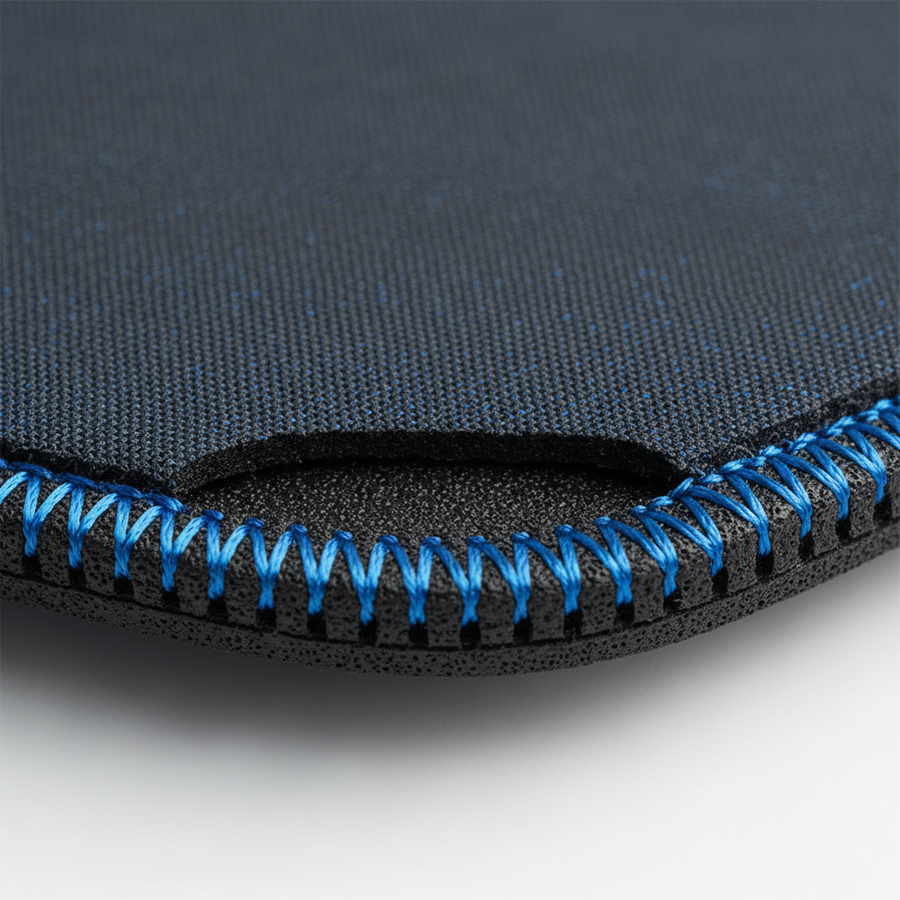
Using a dense, non-slip mousepad acts as a mechanical filter. The ATTACK SHARK CM04 Genuine Carbon Fiber eSport Gaming Mousepad is particularly effective here. Its genuine dry carbon fiber construction is lightweight yet incredibly rigid, providing a stable surface that dampens micro-vibrations before they can translate into acoustic interference.
Comparison: Performance Mousepads as Vibration Dampeners
| Feature | Carbon Fiber (e.g., CM04) | Standard Cloth Pad |
|---|---|---|
| Material Density | High (Genuine Carbon Fiber) | Low (Foam/Fabric) |
| Vibration Absorption | Excellent (Mechanical Filter) | Moderate |
| Surface Consistency | Uniform X/Y Tracking | Varies by weave |
| Durability | Water/Oil/Dust Repellent | Subject to humidity/wear |
Optimization Framework: Calibrating for Stealth
To bridge the gap between high specs and real-world performance, users should move away from the "V-shaped" EQ (boosted bass and boosted treble) common in music listening. Instead, a targeted approach to frequency management is required.
The 60-80Hz Tactical Dip
Conventional wisdom suggests cutting all bass below 100Hz. However, a complete sub-bass removal can eliminate crucial contextual cues, such as the direction of a heavy vehicle or the "weight" of environmental changes. A more effective approach is a slight dip (roughly 6-8dB) specifically around 60-80Hz. This preserves environmental awareness while significantly reducing the masking of footsteps (typically found in the 125Hz–4kHz range).
Step-by-Step Frequency Sweep Calibration
- Identify the Masker: While in-game, run a frequency sweep test. Identify which bass notes from explosions or ambient noise feel the most "oppressive" or physically vibrating.
- Apply the Dip: Using software-level equalization, apply a narrow-band (High Q) reduction to those specific frequencies.
- Flatten the Midrange: Ensure the 500Hz–2kHz range is relatively flat. This is where character callouts and "utility" sounds (grenade pins, reloads) reside.
- Test for "Hiss": If using a wireless headset, check for interference. Ensure your device is compliant with standards like the EU Radio Equipment Directive (RED) to minimize electromagnetic noise.
System Integration: The Latency Component
Audio clarity is only one half of the tactical equation; the other is timing. In a high-performance ecosystem, audio cues must be synchronized with visual data. This is where system-wide latency becomes critical.
When discussing high-performance peripherals, the 8000Hz (8K) polling rate is the current benchmark. At 8000Hz, the polling interval is a near-instant 0.125ms. This reduces micro-stutter and ensures that the cursor path—and thus your crosshair placement—is perfectly aligned with the auditory cue you just processed.
8K Polling Rate Technical Constraints
To effectively utilize an 8K setup (like an 8K mouse paired with a high-end headset), users must account for the following:
- CPU Load: 8K polling stresses IRQ (Interrupt Request) processing. This requires a modern CPU with strong single-core performance.
- USB Topology: Devices must be connected to Direct Motherboard Ports (Rear I/O). Using USB hubs or front panel headers can lead to packet loss and signal degradation, which may indirectly affect audio stability if the USB bus is saturated.
- Sensor Saturation: To fully saturate the 8000Hz bandwidth, movement speed matters. At 1600 DPI, only 5 IPS (inches per second) is required to maintain a stable 8K data stream, whereas at 800 DPI, you need at least 10 IPS.
Ergonomics and Long-Term Performance
Tactical audio requires intense focus, often for hours at a time. Physical discomfort can act as a "cognitive masker," distracting the brain from subtle audio cues. Maintaining an ergonomic posture is essential for sustaining the mental bandwidth needed for stealth play.
Accessories like the ATTACK SHARK ACRYLIC WRIST REST help maintain the wrist in a neutral, inclined position. By relieving arm and wrist pain, users can remain "locked in" to the audio landscape without the distraction of physical strain.
Summary Checklist for Competitive Audio
- EQ Strategy: Avoid V-shapes; use a 6-8dB dip at 60-80Hz.
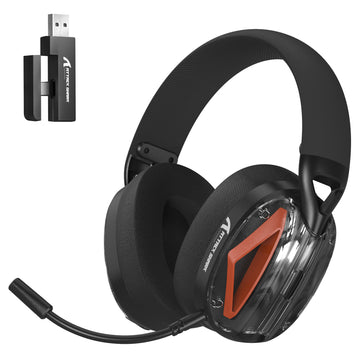
- Headset Choice: Prioritize imaging and soundstage over driver size.
- Isolation: Prefer passive isolation to avoid ANC hiss in quiet environments.
- Vibration Control: Use a rigid mousepad like the ATTACK SHARK CM04 Genuine Carbon Fiber eSport Gaming Mousepad to filter desk noise.
- System Health: Ensure wireless devices meet RoHS and REACH standards for material safety during long sessions.
Final Perspective
The quest for "stealth" audio is a battle against physics and psychoacoustics. By recognizing that more bass is often the enemy of clarity, and by treating the entire gaming setup—from the mousepad to the USB port—as a single integrated system, gamers can bridge the specification credibility gap. True performance isn't found in the loudest explosion, but in the silence between them.
YMYL Disclaimer: This article is for informational purposes only. Prolonged exposure to high volume levels can lead to permanent hearing damage. Always follow the safety guidelines provided by your hardware manufacturer and consult an audiologist if you experience tinnitus or hearing loss. For wireless safety standards, refer to official repositories such as the FCC Equipment Authorization or ISED Canada.