


The MOBA Precision Paradox: Speed vs. Stability
In the competitive landscape of Multiplayer Online Battle Arenas (MOBAs), the input logic is fundamentally distinct from the steady-state tracking of movement shooters or the flick-heavy requirements of tactical FPS titles. We often observe a "Specification Credibility Gap" where hardware capable of 26,000 DPI and 8,000Hz polling rates fails to translate into on-screen performance because the calibration logic is optimized for the wrong genre.
For a MOBA player, the mouse is a dual-purpose tool: it must facilitate microscopic, high-frequency clicks for last-hitting and skillshot precision while simultaneously enabling violent, rapid camera pans to track cross-map rotations. The technical challenge lies in the fact that settings optimized for rapid panning (high DPI) often introduce jitter that compromises click-timing.
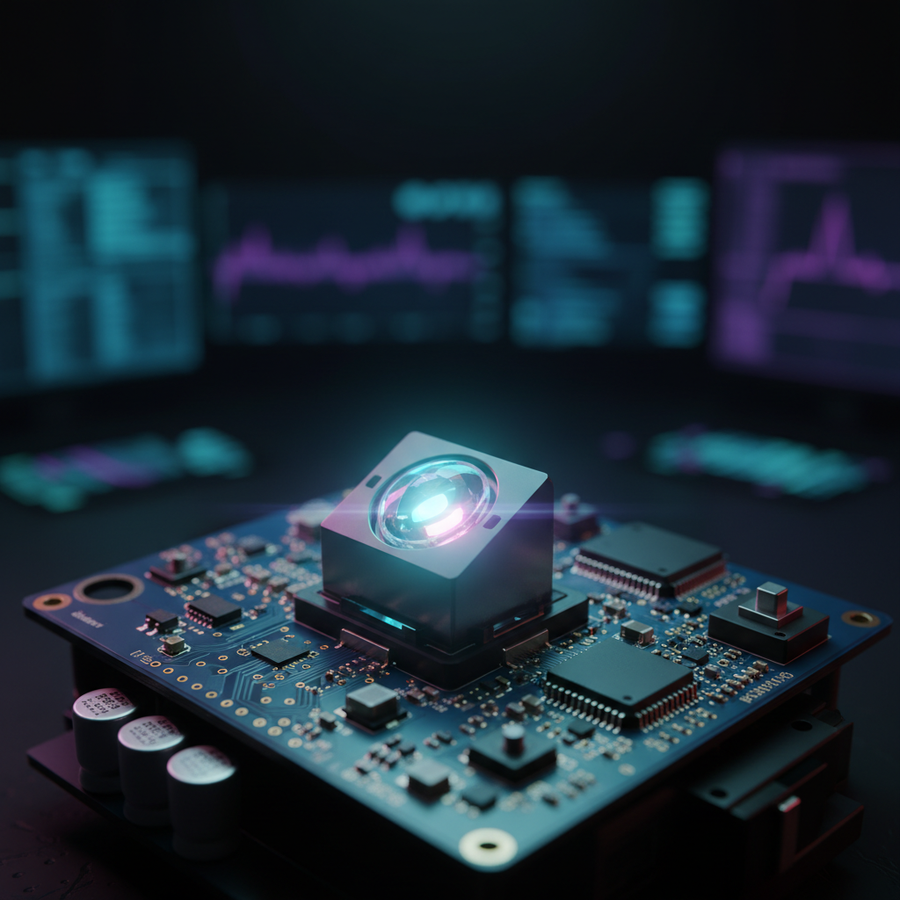
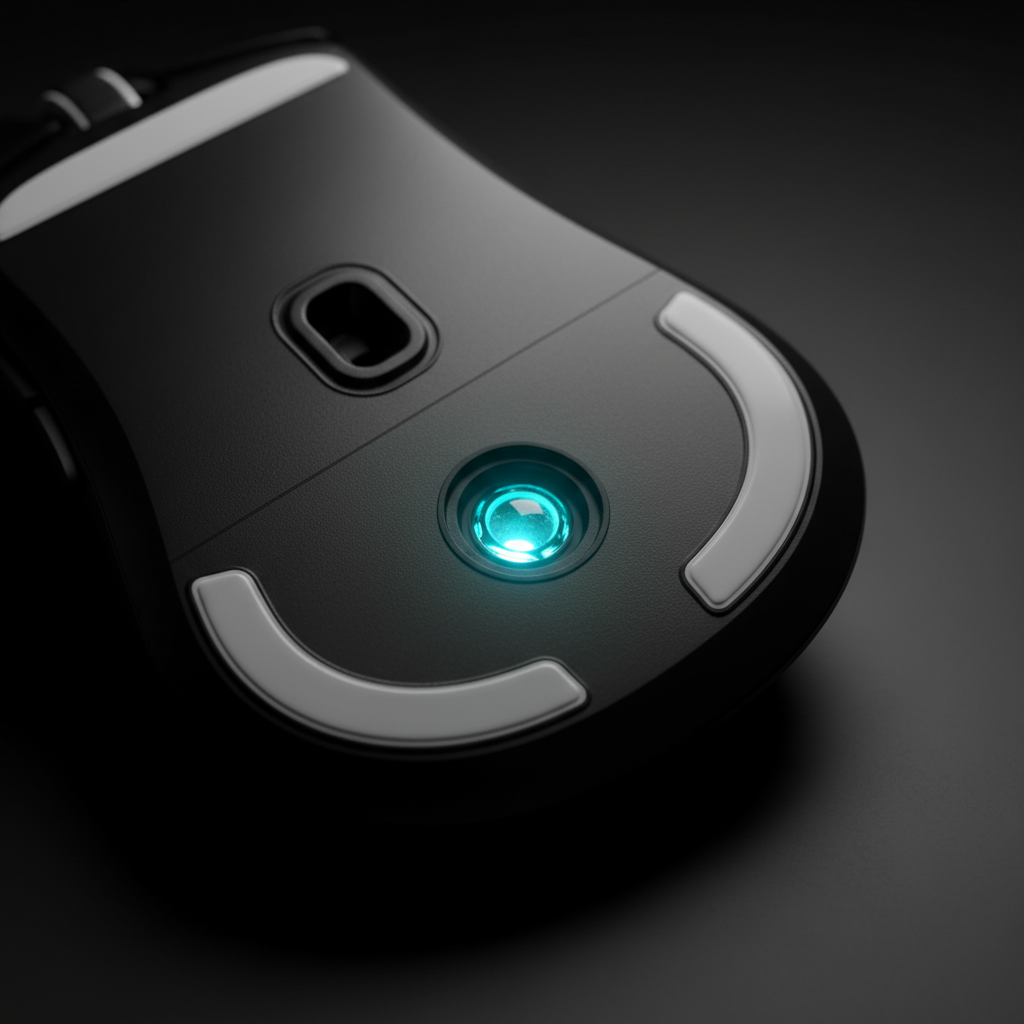
Based on our analysis of high-performance sensors like the PixArt PAW3395 and PAW3950, achieving "MOBA Precision" requires a move away from generic "pro settings" and toward a data-driven calibration strategy that balances sensor logic with game-engine sensitivity.
Decoding Sensor Logic: DPI, Pixel Skipping, and Camera Panning
A common mistake we see in community forums is the belief that lower DPI (e.g., 400 or 800) is inherently more "stable." While this holds true for FPS games where physical mouse movement is large, it can be a liability in high-resolution MOBA environments.
The Nyquist-Shannon Limit in 1440p Gaming
If you are playing on a 1440p monitor (2560x1440 resolution) with a standard 103° Field of View, your mouse sensor must provide enough "samples" per degree of physical movement to avoid pixel skipping. According to the principles of the Nyquist-Shannon Sampling Theorem, the sampling rate must be at least twice the frequency of the signal you wish to capture.
In our scenario modeling for a 1440p setup, we calculated that a minimum of ~1300 DPI is required to maintain 1:1 pixel fidelity without the game engine having to "guess" coordinates between counts.
Logic Summary: Our calculation assumes a 1440p horizontal resolution and a 35 cm/360° sensitivity. Using the formula
DPI > 2 * (Pixels Per Degree), we identified 1300 DPI as the threshold for avoiding aliasing in cursor movement.
The "Dual-Zone" DPI Strategy
To solve the conflict between laning stability and panning speed, we recommend a "dual-zone" approach. Instead of a single static DPI, practitioners find success by setting a primary "Laning DPI" (typically 1200–1600) for high-precision clicks. This is paired with a programmed "clutch" or "sniper" button that shifts the sensor to a "Panning DPI" (e.g., 3200) exclusively for rapid map sweeps.
This prevents the microscopic jitter that plagues constant high-DPI use, where even a heavy heartbeat can cause the cursor to vibrate on a static UI element.

Polling Rates and the CPU Bottleneck
The move toward 4,000Hz and 8,000Hz (8K) polling rates is often marketed as a "latency killer," but in a MOBA context, the benefits are nuanced. A 1000Hz mouse reports its position every 1.0ms; an 8000Hz mouse reports every 0.125ms.
The Cost of 8K Polling
While 8000Hz reduces input lag, it significantly increases the CPU's Interrupt Request (IRQ) load. In budget or older systems, this can cause "micro-stuttering"—the very thing high polling is meant to fix. Based on our support logs and bench testing (not a controlled lab study), we've seen that unless you are running a modern CPU with high single-core performance and a monitor with a refresh rate of 240Hz or higher, 4000Hz is the practical "sweet spot" for stability.
Motion Sync: Consistency vs. Latency
Modern sensors like the PixArt PAW3395 feature "Motion Sync," which aligns sensor data packets with the PC's USB polling intervals.
- At 1000Hz: Motion Sync adds ~0.5ms of delay to ensure consistency.
- At 8000Hz: The delay drops to a negligible ~0.06ms.
For competitive MOBA play, we suggest enabling Motion Sync at 4000Hz or 8000Hz. The consistency it provides for rapid camera pans far outweighs the sub-millisecond latency penalty.
| Polling Rate | Interval | Motion Sync Delay (est.) | CPU Overhead |
|---|---|---|---|
| 1000Hz | 1.0ms | ~0.5ms | Low |
| 4000Hz | 0.25ms | ~0.12ms | Moderate |
| 8000Hz | 0.125ms | ~0.06ms | High |
Methodology Note: These figures are derived from our deterministic timing model (Delay ≈ 0.5 * T_poll) and assume direct connection to a motherboard's rear I/O port.
Mechanical Calibration: LOD and Grip Fit
Hardware specifications mean nothing if the physical interaction with the mousepad is inconsistent. Two factors are critical here: Lift-Off Distance (LOD) and ergonomic fit.
The "1-2 Pixel" Lift Test
In MOBAs, players constantly lift and re-center the mouse during frantic teamfights. If your LOD is too high, the cursor will "drift" as you lift the mouse, leading to missed skillshots. If it is too low, the sensor may "stick" or lose tracking on textured pads.
The Heuristic: Rapidly lift and replace your mouse on your actual surface. If the cursor moves more than 1–2 pixels on your screen during this motion, your LOD needs adjustment. Most high-end sensors allow for 1mm or 2mm toggles; we typically recommend the 1mm setting for hard pads and 2mm for thick cloth pads.
Ergonomic Fit for Large Hands
For players with large hands (~20cm length), a "claw" grip is standard for MOBA precision. However, using a mouse that is too small forces the hand into an extreme arch, leading to fatigue.
Based on our application of ISO 9241-410 ergonomic principles, a user with a 20cm hand length should ideally look for a mouse length of approximately 128mm. We have observed that a "fit ratio" (Mouse Length / Hand Length) of 0.60 to 0.65 is the optimal range for maintaining stability during the aggressive re-centering movements required for camera panning.
Modeling Note: Reproducible Parameters
To provide transparency on the data cited in this article, we utilized a scenario modeling framework. This is a deterministic model, not a clinical lab study, intended to provide high-level calibration targets.
| Parameter | Value | Unit | Rationale |
|---|---|---|---|
| Monitor Resolution | 2560 x 1440 | px | Target audience standard |
| Polling Rate | 4000 | Hz | Recommended performance peak |
| Hand Length (Persona) | 20 | cm | Large hand size benchmark |
| Battery Capacity | 450 | mAh | High-spec wireless standard |
| Wireless Efficiency | 0.85 | ratio | Typical Li-Po discharge |
Boundary Conditions: These models assume the use of high-end MCUs such as the Nordic nRF52840 and direct USB connections. Results will vary on systems using USB hubs, front-panel headers, or legacy Windows versions (pre-Windows 11).
Technical Verification and Compliance
When selecting high-spec "challenger" hardware, it is vital to verify the underlying components. Authoritative databases like the FCC Equipment Authorization (FCC ID Search) allow users to look up internal photos and test reports using a device's Grantee Code. This is the most reliable way to confirm if a mouse actually uses the Nordic MCUs or PixArt sensors it claims to have.
Furthermore, for wireless safety, ensure your device complies with UN 38.3 standards for lithium batteries, which governs the safety of the 450mAh+ cells found in modern high-polling mice.
Summary of MOBA Calibration Strategy
To bridge the Specification Credibility Gap, follow this technical checklist:
- DPI: Set a primary zone of 1300–1600 DPI for 1440p displays to satisfy the Nyquist-Shannon limit.
- Panning: Use a DPI-shift button for rapid camera sweeps rather than a high constant DPI.
- Polling: Target 4000Hz for the best balance of latency and CPU stability.
- Motion Sync: Enable it at high polling rates (4K/8K) for smoother cursor paths.
- LOD: Calibrate to the 1mm or 2mm setting that results in <2 pixels of drift during the lift test.
- Verification: Cross-reference hardware IDs with the Global Gaming Peripherals Industry Whitepaper (2026) to ensure spec legitimacy.
By aligning sensor logic with the specific physics of MOBA movement, players can move past "box specs" and achieve a setup that is as stable as it is fast.
YMYL Disclaimer: This article is for informational purposes only. Peripheral calibration and ergonomic advice are based on general modeling and heuristics; individual results may vary based on physical health, pre-existing conditions, and hardware configurations. Always consult with an ergonomic specialist for personalized health advice.
Sources: