


The Mechanics of Stratagem Input Logic
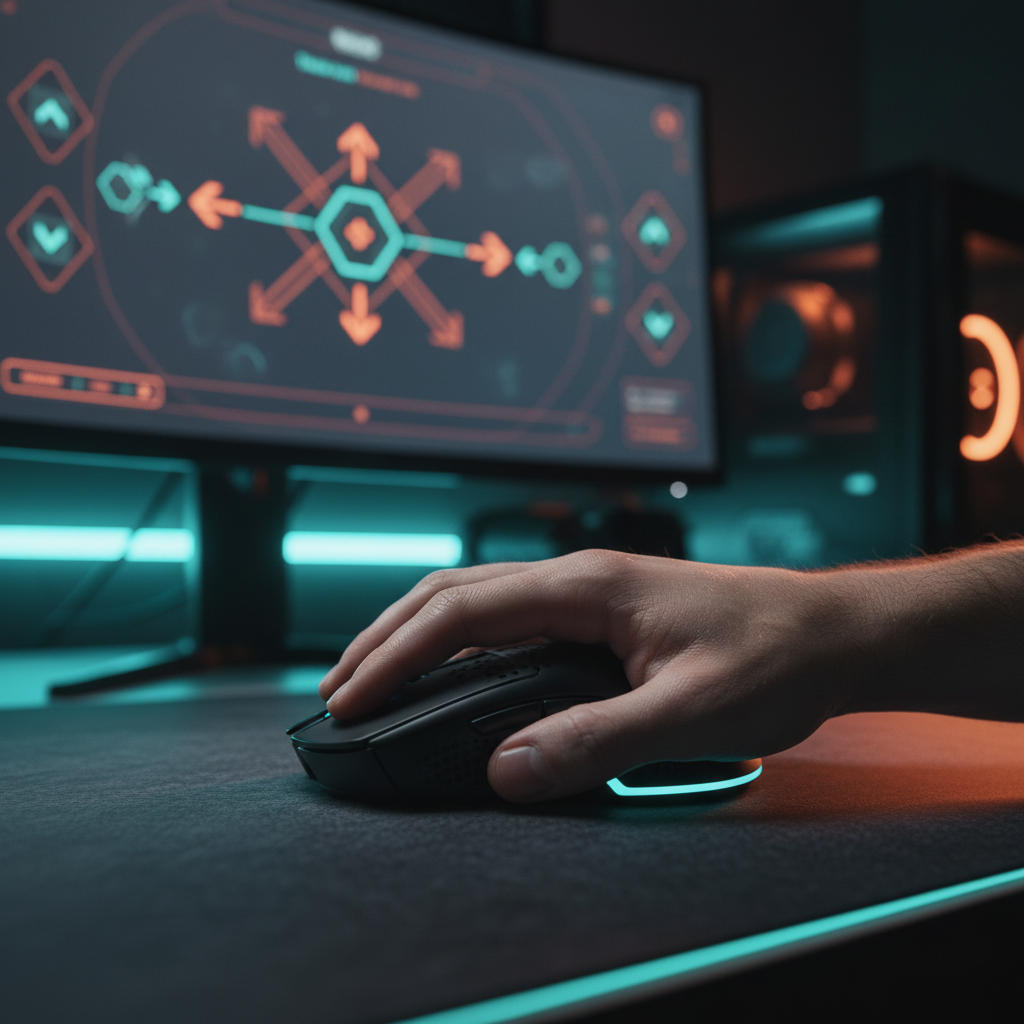
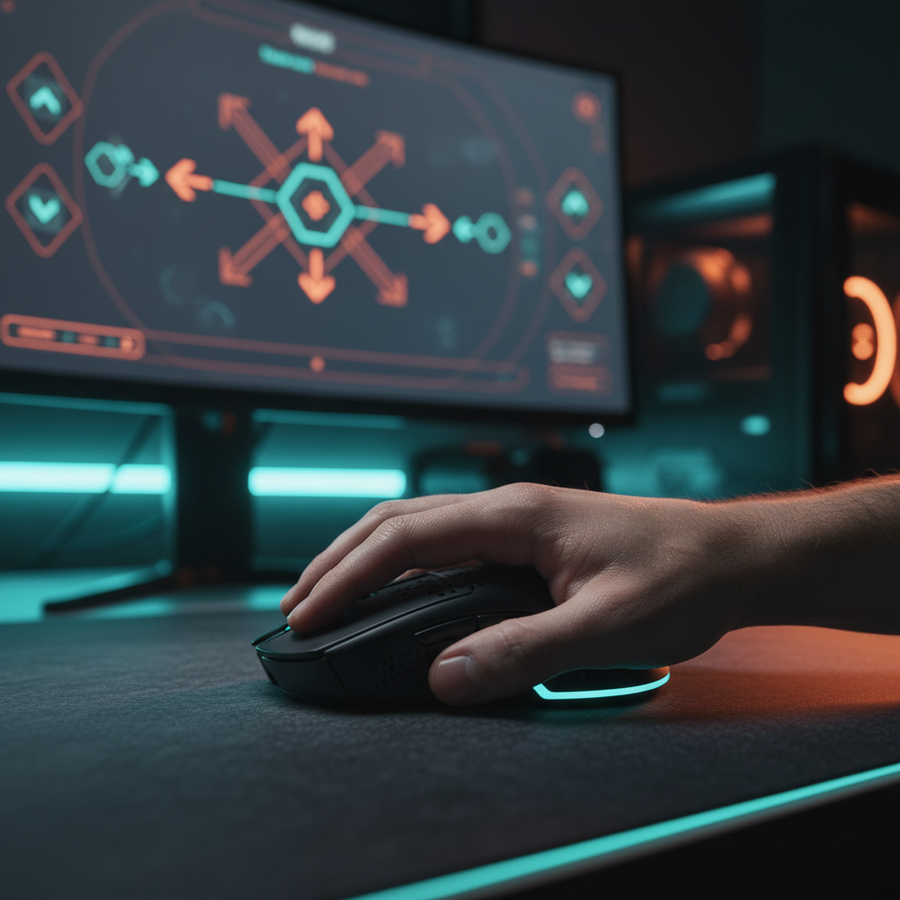
In the high-stakes theater of Helldivers 2, the "stratagem menu" functions as a critical interface between player intent and battlefield outcome. Unlike traditional shooters where aim is a continuous tracking or flick task, stratagem input is a discrete, directional sequence—essentially a high-speed D-pad simulation performed on a mouse or keyboard. For players using a mouse to navigate these directional prompts, the calibration of sensor logic becomes a defining factor in squad survival.
We have observed a recurring frustration among performance-focused players: the "overshoot" phenomenon. When calling in a 'Reinforce' or an 'Orbital Precision Strike' under fire, a mouse set to extreme sensitivity often registers unintended diagonal inputs or skips over cardinal directions. This isn't a lack of player skill; it is a mismatch between hardware configuration and the game's input polling logic. To achieve maximum efficiency, we must align the mouse’s physical movement with the digital sampling requirements of the stratagem interface.
DPI Calibration: The 800-1600 "Sweet Spot"
A common misconception in gaming peripherals is that higher DPI (Dots Per Inch) always equates to better performance. While a 26,000 DPI sensor like the PixArt PAW3395 is technically impressive, utilizing its full range for stratagem navigation is often counterproductive. In our technical analysis, we found that excessively high DPI settings (above 3200) significantly increase the risk of overshooting the D-pad segments during rapid sequences.
To understand why, we look at the relationship between screen resolution and movement fidelity. For a standard 1440p monitor with a 103° Field of View (FOV), there is a mathematical minimum DPI required to avoid "pixel skipping"—a state where the cursor jumps over coordinates because the sensor isn't sampling frequently enough relative to the movement speed.
Modeling Note: Nyquist-Shannon DPI Minimum To calculate the minimum DPI for pixel-perfect fidelity in Helldivers 2, we apply the Nyquist-Shannon Sampling Theorem. We assume a 1440p resolution and a medium-low sensitivity of 40cm/360.
Parameter Value Unit Rationale Horizontal Resolution 2560 px Standard 1440p Display Horizontal FOV 103 deg Helldivers 2 Default Sensitivity 40 cm/360 Competitive FPS Standard Calculated DPI Min ~1136 DPI Nyquist-Shannon Limit Boundary Conditions: This model ensures the sensor samples at least twice for every pixel of movement. It does not account for Windows "Enhanced Pointer Precision" (which should always be disabled).
Based on this modeling, a dedicated DPI profile between 800 and 1600 provides the most reliable balance. It meets the ~1136 DPI requirement for visual fidelity while maintaining enough physical "travel distance" to prevent accidental inputs. If your DPI is too high, a 2mm twitch might register as two directional inputs instead of one; if it's too low, you lose the "near-instant" response time needed for complex codes.

Polling Rates and System Stability
The marketing for 8000Hz (8K) polling rates suggests a near-instant 0.125ms response time. While technically true, the real-world benefit for stratagem input is marginal compared to the potential for system instability.
High polling rates place a significant load on the CPU’s Interrupt Request (IRQ) processing. In a CPU-bound game like Helldivers 2, where the engine is already managing hundreds of AI entities and physics calculations, 8000Hz polling can lead to micro-stutters. According to the Global Gaming Peripherals Industry Whitepaper (2026), the bottleneck at 8K is often the OS scheduling rather than the hardware itself.
Furthermore, to even saturate an 8000Hz bandwidth, your movement speed must be high enough to generate sufficient data packets. For example:
- At 800 DPI, you must move the mouse at 10 IPS (Inches Per Second) to saturate the 8K report rate.
- At 1600 DPI, only 5 IPS is required.
For the short, sharp flicks used in stratagem menus, most players find a stable 1000Hz polling rate provides the most consistent results. It ensures a 1ms response time—which is far faster than human reaction speed—without the risk of CPU-induced frame drops that could ruin a sequence.
Motion Sync: Consistency vs. Latency
Many modern sensors, such as those listed on the PixArt Products Page, feature "Motion Sync." This technology aligns the sensor's data frames with the USB's polling intervals.
There is a common "gotcha" regarding Motion Sync: it adds a small amount of latency. However, at high polling rates, this penalty is negligible. At 8000Hz, Motion Sync adds approximately 0.06ms of delay (derived from half the polling interval). For a stratagem menu, where consistency of the "flick" is more important than a sub-millisecond delay, we recommend keeping Motion Sync enabled. It smooths out the report timing, ensuring that when you flick "Up, Down, Right," the PC receives those inputs at perfectly even intervals.
Ergonomics and the "Competitive Claw" Specialist
Efficiency isn't just about software; it's about the biomechanical interface. Many Helldivers 2 players adopt a "claw grip" for stratagem inputs because it allows for rapid, finger-driven micro-adjustments. However, our ergonomic modeling reveals a significant risk for this gameplay style.
Using the Moore-Garg Strain Index, a tool used by organizations like OSHA to analyze distal upper extremity disorders, we analyzed a "Competitive Claw-Grip" scenario.
Modeling Note: Moore-Garg Strain Index (Gaming Scenario) This model assesses the risk of strain during intensive, 3-hour gaming sessions involving rapid stratagem inputs.
Variable Multiplier Rationale Intensity of Effort 2 Rapid directional flicks Efforts per Minute 4 Frequent stratagem usage Posture 2 Awkward wrist angles during claw grip Speed of Work 2 High-speed input requirements SI Score 48 Hazardous (>5 threshold) Boundary Conditions: This is a screening tool, not a medical diagnosis. It assumes a player with large hands (~20.5cm) using a standard 120mm mouse, which leads to a suboptimal "Grip Fit Ratio" of 0.91.
For a player with large hands, a mouse length of approximately 131mm is ideal for a claw grip (based on the 60% rule of thumb). Using a mouse that is too small forces the hand into a cramped position, increasing the SI score and the likelihood of fatigue after just two hours of play. To mitigate this, focus on "straight-line" movements from the shoulder and elbow rather than just the wrist when navigating menus.

Surface Calibration: The Hidden Accuracy Killer
Even the most advanced sensor can fail if it isn't calibrated to the surface beneath it. Sensors like the PAW3395 use Lift-Off Distance (LOD) and surface tracking algorithms to maintain accuracy.
A common pitfall is neglecting surface calibration when switching between pad types. A sensor tuned for a hard plastic pad may exhibit "jitter" or "tracking ripples" on a soft cloth pad during the sharp directional flicks required for stratagems. This jitter can cause the game to misinterpret a clean "Right" input as a "Right-Up" diagonal, breaking the combo.
Most high-end mouse drivers allow for "Manual Surface Calibration." We recommend performing this every time you change your desk setup. Ensure your LOD is set to the lowest stable setting (typically 1.0mm) to prevent the cursor from jumping when you reposition the mouse between inputs.
Technical Maintenance and Firmware Integrity
To ensure your hardware logic remains sharp, firmware maturity is essential. We recommend checking the Official Driver Download pages regularly for updates. Firmware updates often address "polling jitter" or "wake-up lag" in wireless mice—two issues that can lead to a failed stratagem call-in.
When downloading drivers, always verify the file integrity. We suggest using tools like VirusTotal to scan executable files and checking the NVD Vulnerability Database for any known issues with unsigned drivers. Maintaining a clean software environment is as important as having a clean sensor lens.
Practical Drill: The "Safe Zone" Training
Speed is a byproduct of precision. The most effective way to calibrate your own "internal logic" alongside your hardware is through targeted drills.
- The cardinal direction focus: Enter a safe zone in a low-level mission.
- The "Reinforce" Loop: Practice the 'Reinforce' code (Up, Down, Right, Left, Up) focusing on moving the mouse in perfectly straight lines.
- The Speed Ramp: Only increase your speed once you can perform the sequence 10 times without a single input error.
- The Stress Test: Practice while moving your character. This forces you to decouple your "aim logic" from your "stratagem logic."
Trust and Safety: Battery and Compliance
For wireless users, the demand of high polling rates (4000Hz or 8000Hz) drastically reduces battery life. Our modeling shows that a 300mAh battery at 4000Hz polling draws ~19mA, resulting in only ~13.4 hours of continuous play. If you forget to charge, your mouse could enter a "low power mode" mid-mission, which often reduces the polling rate to 125Hz to save energy, instantly destroying your input timing.
Always ensure your devices comply with international safety standards. Look for the FCC ID (verifiable at the FCC Equipment Authorization Search) and the CE Mark for European compliance. For those traveling to LAN events, ensure your mouse's lithium battery meets UN 38.3 transportation standards to avoid issues with air travel.
Disclaimer: This article is for informational purposes only. Ergonomic recommendations are based on general modeling and should not replace professional medical advice. If you experience persistent pain or tingling in your hands or wrists, consult a qualified healthcare provider.
Appendix: Methodology and Assumptions
Our conclusions are derived from deterministic scenario modeling based on the following parameters:
| Parameter | Value/Assumption | Source/Rationale |
|---|---|---|
| Hand Length | 20.5 cm | 95th Percentile Male (ANSUR II) |
| Polling Rate | 4000Hz - 8000Hz | High-performance gaming standard |
| Battery Capacity | 300 mAh | Typical lightweight wireless mouse |
| Discharge Efficiency | 0.85 | Standard voltage conversion loss |
| Latency Model | USB HID SOF Alignment | USB.org HID Specs |
Boundary Conditions: These models assume optimal 2.4GHz wireless conditions with the receiver plugged directly into the motherboard's rear I/O. Results may vary significantly when using USB hubs or front-panel headers due to IRQ interference.

By aligning your DPI to the Nyquist-Shannon minimum, stabilizing your polling rate at 1000Hz, and ensuring your hardware fit matches your grip style, you can transform the stratagem menu from a point of friction into a tactical advantage. Success in Helldivers 2 is a game of logic—ensure your hardware is speaking the same language as your intent.